What Gets Lost in Translation
Rice Vinegar Is Not a Mirin Substitute — Here's What Actually Works
Rice vinegar adds acid that mirin doesn't have. What mirin actually is, what's in US bottles labeled mirin, and what to use instead.
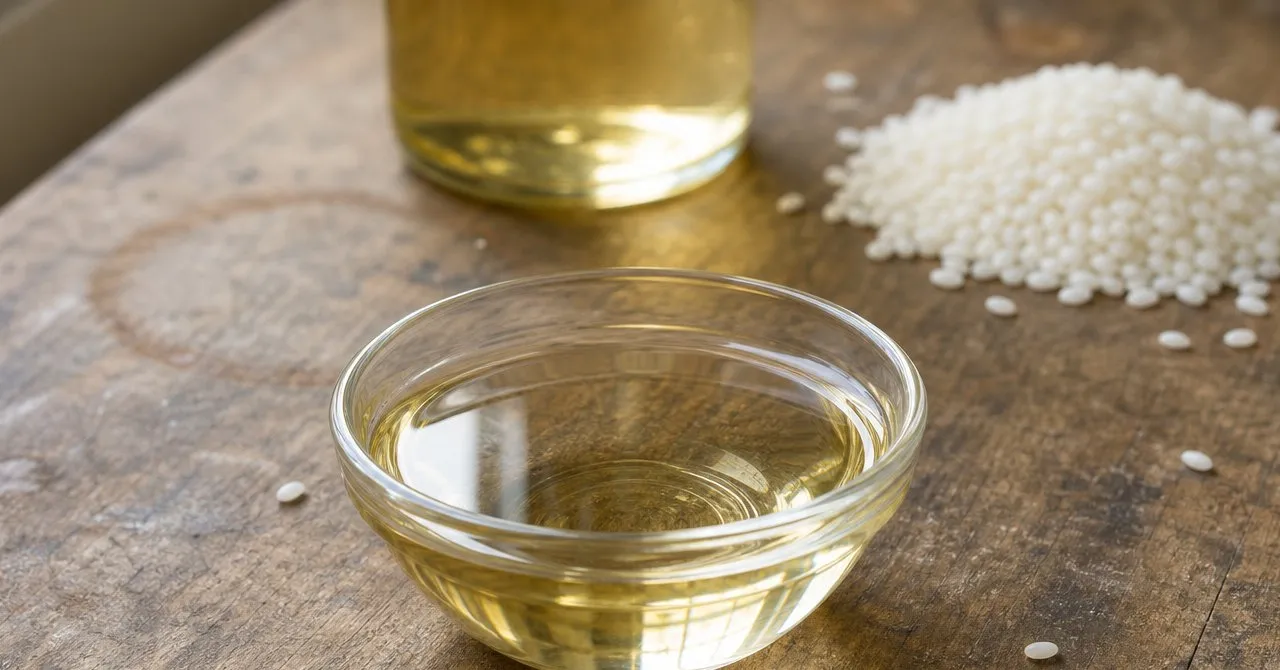
If you have ever searched for a mirin substitute in English, you have probably seen this advice: mix rice vinegar with a little sugar. It turns up in recipe posts and cooking forums again and again.
It points in the wrong direction. One of the clearest clues comes from Japanese manufacturers themselves. They do make a sweetener-plus-vinegar product, and they sell it under a different name, in a different legal category from mirin.
The short answer
Mirin is a sweet rice wine, not a sweet vinegar. Its defining characteristics are alcohol (about 14% ABV) and a large, varied load of sugars (roughly 45%) produced by fermentation. Sourness is not part of its design.
Substituting rice vinegar adds at least about 0.6 g of acetic acid per tablespoon to a dish that was never built around acid. It does not approximate mirin. It introduces a flavor that mirin does not have.
Use sake plus sugar instead. For 1 tablespoon of mirin: 1 tablespoon sake + 1 to 1½ teaspoons granulated sugar. Details are below.
What mirin actually is
In Japan, mirin is regulated under the Liquor Tax Act (酒税法). The National Tax Agency’s guide summarizes the definition as:
米、米こうじに焼酎又はアルコールを加えてこしたもの(アルコール分が15度未満でエキス分が40度以上等のもの) — Rice and rice koji with shochu or alcohol added, then strained (under 15% alcohol, with an extract content of 40 or more, among other conditions). (National Tax Agency, 酒税のしおり 2025)
Two things follow from that sentence, and most English-language cooks never hear about either.
First: mirin is legally an alcoholic beverage. In Japan it can only be sold by a licensed liquor retailer. It is taxed as liquor, and it falls outside Japan’s reduced consumption-tax rate for food. Whatever aisle it sits in, legally it is liquor.
Second: “extract content of 40 or more” means at least 40 grams of non-volatile solids per 100 mL, most of it sugar. Takara’s technical documentation puts the real figure at around 45% sugar, of which about 80% is glucose. The remainder is maltose, isomaltose, panose, and a range of longer-chain oligosaccharides.
Most English recipes skip this part, and it matters most:
In traditional hon-mirin, nobody adds that sugar. Mirin is made by combining steamed glutinous rice, rice koji, and shochu or distilled alcohol, then letting the mixture saccharify and mature. According to Japan’s mirin makers’ association, that typically takes 40 to 60 days, and some traditional brewers age it far longer. During that time, amylase enzymes from the koji break the rice starch down into sugars, and protease enzymes break the rice protein down into amino acids. The sweetness is made by enzymes out of rice, over weeks.
(Some mass-market hon-mirin, including Kikkoman’s Manjo hon-mirin sold in Japan, also lists added sugars, 糖類, among its ingredients. The defining process is still the enzymatic breakdown of rice.)
That process is why mirin tastes the way it does. It is also why nothing you assemble in thirty seconds will be identical.
Why vinegar is the wrong direction
Mirin is only mildly acidic
Mirin does contain organic acids. Lactic acid is the most abundant, followed by citric, malic, succinic, and fumaric acids. But these are minor components. They sit underneath the sweetness and umami and give the liquid depth. You do not taste them as sourness. Mirin is only mildly acidic: around pH 5, according to secondary sources, and nothing like vinegar’s sharpness.
Rice vinegar is the opposite kind of ingredient. Japan’s JAS standard for brewed vinegar requires grain vinegars to have at least 4.2% acidity. In vinegar, acid is not a background note. It is the point of the product.
So when a recipe says “1 tablespoon rice vinegar + ½ teaspoon sugar = 1 tablespoon mirin,” it adds at least about 0.6 grams of acetic acid to a dish whose original seasoning had essentially none. In a simmered dish or a glaze, that changes the balance of the whole thing.
Unlike vinegar, alcohol evaporates readily and takes fishy and gamey odor compounds with it. Vinegar’s acid does not leave the pan the way alcohol does, so the sourness stays in the dish.
The sweetness is different too
Even setting acid aside, sugar-only swaps miss the character of the sweetness.
If we index table sugar (sucrose) at 100:
| Sugar | Relative sweetness |
|---|---|
| Sucrose (table sugar) | 100 |
| Glucose (~80% of mirin’s sugar) | 70 |
| Oligosaccharides | 30–40 |
Kikkoman describes mirin’s sweetness as “made up of multiple sugars with a gentle sweetness, such as glucose and oligosaccharides.” It says that refined, soft sweetness “lasts longer than sugar or a single sugar.”
The difference is subtle. In one Japanese side-by-side comparison (described below), the sugar version actually left slightly more sweetness on the finish. The difference is real, but it is a matter of character, not a dramatic contrast.
A telling clue: Japanese makers sell the vinegar version under another name
Japanese labels distinguish three categories of mirin-like product:
| 本みりん (hon-mirin) | みりん風調味料 (mirin-style seasoning) | 発酵調味料 (fermented seasoning / salted mirin) | |
|---|---|---|---|
| Legal class | Liquor | Food | Food |
| Alcohol | ~14% | Under 1% | ~10–11% |
| Salt | None | None | ~2% |
| Liquor tax | Yes | No | No |
| Consumption tax | 10% | 8% | 8% |
| License to sell | Required | Not required | Not required |
Now look at what is in a bottle of mirin-style seasoning. The ingredient list for Mizkan’s “Hon-Teri,” a leading brand, reads:
水あめ(国内製造)、米および米こうじの醸造調味料、醸造酢/酸味料 — Starch syrup (made in Japan), rice and rice-koji brewed seasoning, brewed vinegar / acidulant.
There it is: brewed vinegar and an acidulant, in a product built on sugar syrup.
Japanese manufacturers make something close to what English-language substitution advice describes, sweetener plus vinegar. That product sits in a different legal category, under a different name. It cannot be called hon-mirin because it lacks mirin’s alcohol and fermentation, not because of the vinegar. Still, it is telling that the vinegar version exists and is sold as something other than mirin.
In Japanese terms, rice vinegar plus sugar is a rough homemade みりん風調味料. It is not a stand-in for hon-mirin.
Check your bottle: most American “mirin” isn’t hon-mirin either
Before you worry about substitutions, consider that the bottle already in your pantry may not be what you think it is.
| Product (US market) | Listed ingredients | ABV | Sodium per tbsp |
|---|---|---|---|
| Kikkoman Manjo Aji-Mirin | Glucose Syrup, Water, Alcohol, Rice, Corn Syrup, Salt | 8% | ~90 mg (180 mg per 2 tbsp) |
| Kikkoman Kotteri Mirin | Corn Syrup, High Fructose Corn Syrup, Water, Fermented Rice Seasoning (Water, Rice, Corn Syrup, Alcohol, Salt), Vinegar, Sodium Benzoate | not stated | 5 mg |
| Takara Mirin (Gourmet Seasoning Sake) | Sake, corn syrup, dextrose, water | 12% | not stated online |
| Eden Foods Mirin | Water, Rice, Koji (Aspergillus oryzae), Sea Salt | not stated | 130 mg |
Read that table again with the Japanese categories in mind:
- Three of the four contain corn syrup. That sugar is added, not created by koji over weeks of fermentation.
- Three of the four list salt. In Japan, adding salt is the legal mechanism (不可飲処置, “rendering it undrinkable”) that moves a product out of the liquor category. Eden’s mirin has 130 mg of sodium per tablespoon, about 0.33 g of salt or roughly 2%. That is in line with Japanese salted mirin-type seasonings. Kikkoman Aji-Mirin has about 90 mg per tablespoon. In Kotteri Mirin the salt sits inside a sub-ingredient, and the label shows just 5 mg of sodium per tablespoon.
- One of them contains vinegar and high-fructose corn syrup and is sold in the US as “mirin.”
- None of them matches the Japanese hon-mirin profile: no salt, sugars produced mainly by koji, and roughly 14% ABV.
This is less a conspiracy than a structural consequence of real mirin being an alcoholic beverage. Most of these products cut the alcohol, add salt, or both. Takara’s version keeps 12% alcohol and lists no salt, and its own online store requires buyers to be 21 or older. Its sugar, though, is added as corn syrup and dextrose rather than produced by koji.
Practical upshot: check the sodium line. At 130 mg (Eden) or about 90 mg (Aji-Mirin) per tablespoon, the salt adds up, so go easier on the soy sauce. Kotteri’s 5 mg does not matter. If corn syrup is listed first, you have a sweetener rather than a rice wine, and it will not do the alcohol-dependent jobs described below.
What mirin is actually doing in the pot
Four jobs. Only some of them survive substitution.
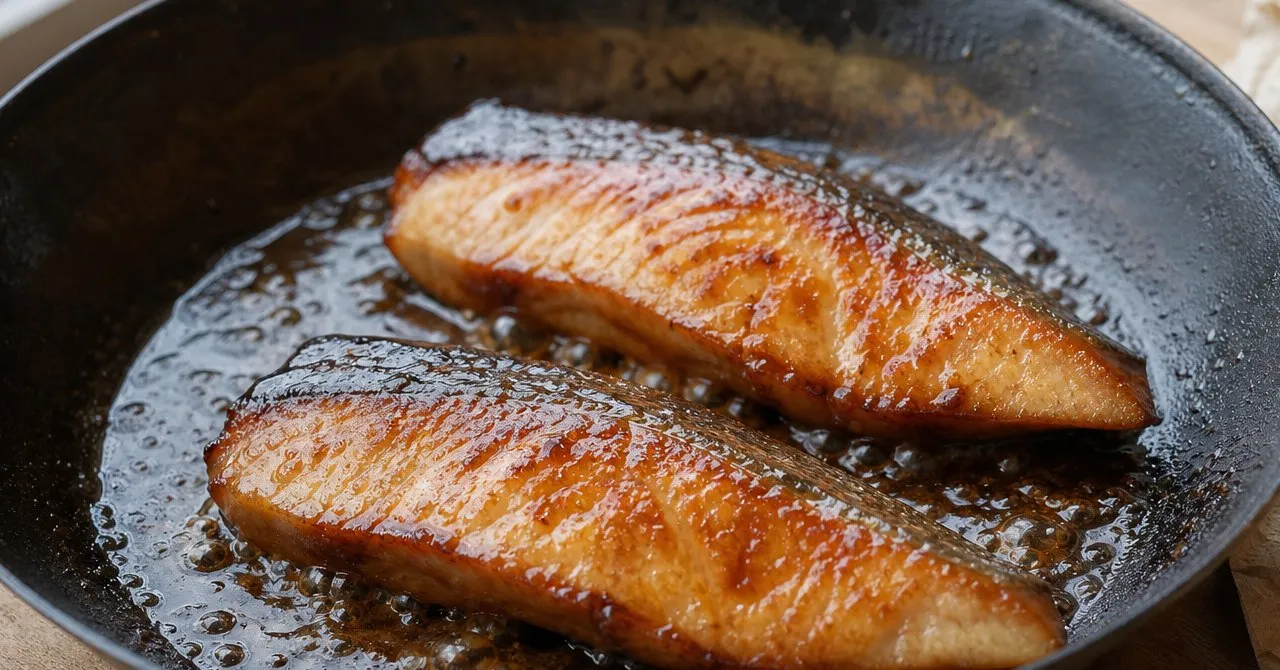
1. Gloss. This is the one people notice. Kikkoman gives three reasons: large oligosaccharide molecules coat the surface of the food, they hold water so it doesn’t evaporate, and their high viscosity keeps the seasoning on the surface. Kikkoman says mirin glazes more readily than sugar and sake. One published gloss measurement on grilled Spanish mackerel found:
| Seasoning | Gloss index |
|---|---|
| Mirin + soy sauce | 180 |
| Sugar + sake + soy sauce | 152 |
| Sugar + soy sauce | 132 |
(Data reported by Hon-Mirin Kenkyujo (本みりん研究所), a privately run mirin information site, citing Hideo Morita, Mirin no Chishiki (Saiwai Shobo), p. 141. Measurement method not described.)
Not every comparison finds a large visible difference. In the Japanese side-by-side described below, the sugar-and-sake version also glazed well.
2. Keeping simmered food from falling apart. Vegetables collapse during simmering because pectin, the substance that glues plant cells to each other, dissolves out. Takara’s research documentation states that alcohol suppresses pectin dissolution during heating, and that “used together with sugar, it can prevent collapse more effectively.” In electron micrographs, mirin-treated potato kept cell-wall structure that untreated potato lost. (As cited by Takara: Kawabe & Morita 1998; Takakura et al. 2000. We have not reviewed the original papers.)
This helps explain why simmered dishes made with mirin hold their shape. It is an alcohol-plus-sugar effect, which sake plus sugar can reproduce.
3. Removing off-odors. Alcohol evaporates at a low temperature (pure ethanol boils at 173°F, or 78.3°C) and carries volatile fishy and gamey compounds out with it.
4. Umami and depth. Mirin contains amino acids, glutamic and aspartic acid prominent among them, plus peptides and aroma compounds developed during fermentation. No substitution reproduces this, because it requires the fermentation.
What to use instead: a substitution ladder
Ranked from closest to furthest.
★★★ Sake + sugar — the standard answer
Per 1 tablespoon of mirin: 1 tablespoon sake + 1 to 1½ teaspoons granulated sugar.
Kikkoman’s FAQ suggests combining an alcoholic seasoning with something sweet, such as cooking sake and sugar, sweetened to taste. It notes that “you won’t get exactly the same cooking effects as hon-mirin,” but the swap works.
Takara publishes the conversion from the other direction: by weight, you need about 3× as much mirin as sugar for the same sweetness. That fits the composition data. Mirin is about 45% sugar, mostly glucose at about 70% of sucrose’s sweetness, and 45% × 70% comes to roughly one third.
So 1 tablespoon of mirin (about 18 g) contains about 8 g of sugars but tastes about as sweet as 6 g of table sugar. That is roughly 1½ US teaspoons of granulated sugar, which weighs about 4 g per teaspoon. Japanese recipes call the same amount “2 teaspoons” — not because the spoons differ (a Japanese teaspoon is 5 mL, a US one about 4.9 mL), but because Japanese home cooks usually use jōhakutō, a soft, moist white sugar that weighs only about 3 g per teaspoon. Use 1 teaspoon for a lighter touch, or 1½ teaspoons to match mirin’s sweetness.
A side-by-side comparison in a Japanese article reviewed by a registered dietitian (Tokubai News) made teriyaki three ways: with hon-mirin, with sake plus about 6 g of sugar, and with sake plus honey. It found “no major difference in appearance,” and said the sugar and honey versions also produced a beautiful glaze. The sugar version left slightly more sweetness on the finish, “but not to a degree you’d notice without comparing.”
You get: alcohol effects, sweetness, most of the gloss, anti-collapse. You lose: some of the character of the sweetness, the amino acids, the aroma.
★★★ Salted cooking sake + sugar
Same ratio. Just remember it brings salt. Japanese 料理酒 (ryōrishu, salted cooking sake) runs about 2.2 g salt per 100 g, so a tablespoon adds roughly 0.33 g. Cut back your soy sauce accordingly.
★★ Sake + honey
1 tablespoon sake + ½ to ⅔ teaspoon honey, as one Japanese substitution guide lists it. The Tokubai comparison above used about 4 g of honey with 1 tablespoon of sake.
★ Water + sugar (non-alcoholic)
1 tablespoon water + 1 teaspoon sugar, the 3:1 water-to-sugar ratio Just One Cookbook gives. You lose the alcohol’s odor-removal and anti-collapse effects entirely. Acceptable when you cannot use alcohol, but not equivalent.
✗ Rice vinegar + sugar
It adds acid the original dish never had, and that acid does not cook off the way alcohol does. If a Japanese recipe uses acid, it says so.
For the record, Japanese substitution guides do occasionally include a tiny amount of vinegar. One guide lists “1 tbsp water + 1 tsp sugar + ¼ tsp vinegar,” with the vinegar as a trace accent to “tighten the aftertaste.” That is roughly 1.25 mL. The common English-language version calls for a full tablespoon, about twelve times as much, in a completely different role.
FAQ
Is aji-mirin the same as mirin? Not in the Japanese sense. Kikkoman’s US Aji-Mirin lists glucose syrup as its first ingredient and contains corn syrup and salt. It is 8% ABV, with about 90 mg of sodium per tablespoon. In Japanese product categories, that places it closer to a salted fermented seasoning than to hon-mirin. It is usable; just account for the salt and the added sugar.
Can I just use sugar? For sweetness, yes. You may lose some gloss (Japanese makers say a mix of sugars glazes more readily than sucrose alone), the anti-collapse effect (that needs alcohol), and the odor removal. Japanese cooking guides also warn that sugar can scorch before enough gloss develops.
Does the alcohol cook off? Less than many people assume. According to USDA retention data, about 40% of the alcohol remains after 15 minutes of simmering, and a quick glaze cooks for less time than that. If you need to avoid alcohol entirely, use the water-and-sugar option. The odor-removing effect happens as the alcohol evaporates.
Do I need real hon-mirin? For everyday cooking, no. But if a dish’s whole appeal is its glaze (teriyaki, glazed simmered fish, nimono), real hon-mirin brings depth and aroma the substitutes cannot fully replicate. In side-by-side comparisons, though, the visual difference in gloss can be small.
What about “mirin-style seasoning”? Kikkoman describes it as sugars mixed with rice or rice koji, acidulants, and seasonings, and it is under 1% alcohol. It sweetens, but it won’t do the alcohol-dependent jobs.
How this article was researched
The figures in this article come from the Japanese-language and official sources listed below: Japan’s National Tax Agency and agriculture ministry, the national food composition database, and technical pages published by Japanese mirin makers. Details on US products come from labels as published by retailers and manufacturers as of October 2026; formulations change, so check your own bottle. Quotations from Japanese sources are kept short and translated by us. Substitution ratios are taken from the named Japanese sources rather than developed by this site. Where a source’s own evidence is limited, as with the gloss data, we say so.
Sources
Japanese primary sources:
- 国税庁『酒税のしおり』2025 — 酒類の分類及び定義 (National Tax Agency — legal definition of mirin)
- 農林水産省 醸造酢の日本農林規格 (MAFF — JAS standard for brewed vinegar)
- 文部科学省 食品成分データベース — 本みりん / みりん風調味料 / 料理酒
- キッコーマン 本みりんの調理効果
- キッコーマン みりん問答集
- キッコーマン お客様相談センター — 本みりん/みりん風/みりんタイプの違い
- キッコーマン マンジョウ本みりん 製品情報
- 宝酒造 本みりんの複雑な風味を形成する成分
- 宝酒造 煮崩れ〜その要因と防止する方法〜
- 宝酒造 てり・つや〜その発現と向上方法〜
- 宝酒造 Q&A 砂糖の代わりに本みりん
- 全国味淋協会 本みりんの知識
- ミツカン ほんてり FAQ
- 本みりん研究所 本みりんの調理効果とは? (gloss data, citing 森田日出男『みりんの知識』幸書房)
- トクバイニュース みりんの代用検証(管理栄養士監修)
- かわしま屋 みりんの代用調味料一覧
- 発酵ライフ推進協会 「みりん」と「砂糖」の違い
US product labels:
- Kikkoman Kotteri Mirin
- Kikkoman Manjo Aji-Mirin (Wegmans listing)
- Takara Sake USA Gourmet Seasoning Sake
- Eden Foods Mirin (King Soopers listing)
Other:
- Just One Cookbook — All About Mirin
- Idaho State University — Alcohol cooks out, or does it? (citing USDA Table of Nutrient Retention Factors, Release 6)
This is part of our series on what English-language Japanese recipes get wrong — and why. See also: Teriyaki Is Not a Sauce and Japanese Curry Is Not Indian Curry.