What Gets Lost in Translation
Teriyaki Is Not a Sauce. It's a Technique.
In Japanese, teriyaki names a way of glazing, not a bottled sauce. Where American teriyaki came from, and how the Japanese version is made.
Japanese dictionaries define teriyaki consistently, and none of them mention a bottle.
魚の切身や鳥肉などを、みりんとしょうゆとをまぜたたれにつけておき、そのたれを塗りながらつやが出るように焼くこと。 — Fish fillets, poultry, and the like, steeped in a sauce of mirin mixed with soy sauce, then grilled while that sauce is brushed on so that a gloss appears. — 精選版 日本国語大辞典 (Shogakukan’s Comprehensive Dictionary of the Japanese Language, abridged edition)
The definitions describe an action and a result: brush while grilling, produce shine. They name mirin and soy sauce, but no product.
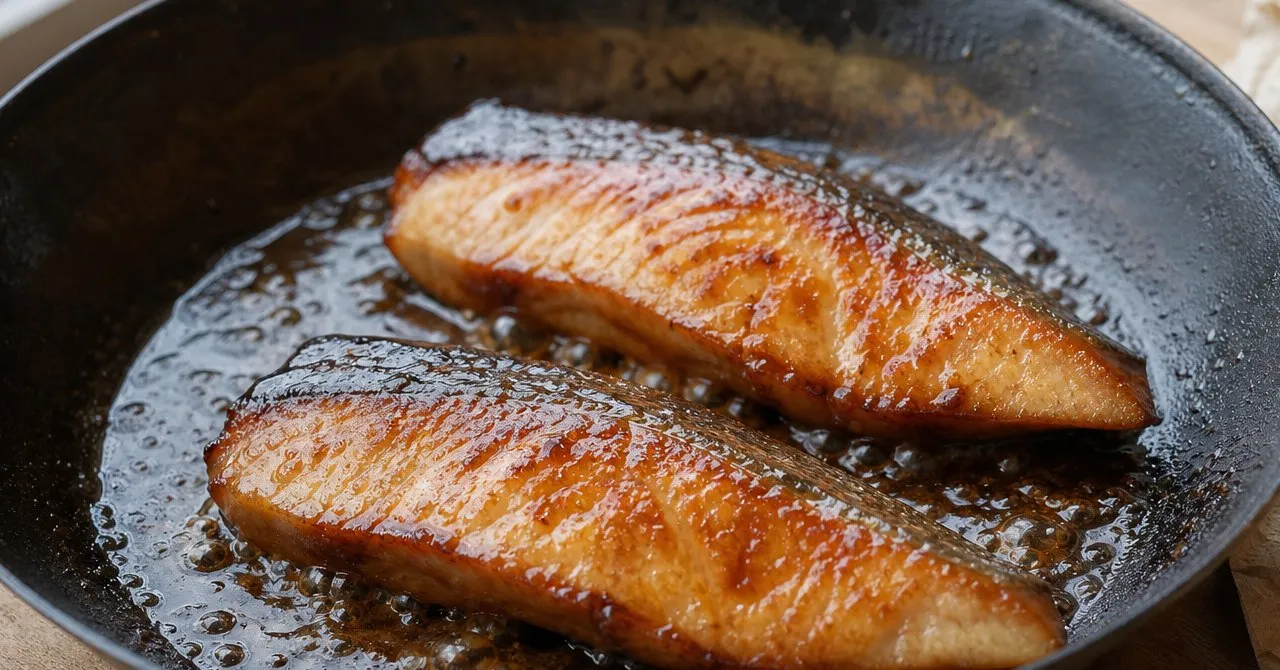
Teri (照り) means gloss. Yaki (焼き) means grilled. The name of the dish describes what the surface looks like when it is done right.
So when an English recipe opens with “first, make the teriyaki sauce,” it has already reframed the dish. In Japanese cooking, teriyaki is less a sauce you make than a finish you produce, on the grill or in the pan.
The short answer
- Japanese teriyaki is a glazing technique. The protein is grilled (or, in today’s home kitchens, often seared in a frying pan), and a soy–mirin mixture is brushed on or reduced around it until it turns glossy. The classic version uses fish. It often contains no added sugar at all.
- American teriyaki is a marinade-and-sauce tradition that developed in the US from the late 1950s: in backyard barbecue culture, in Hawaii, and later in Seattle. It is typically built on soy sauce, sugar or brown sugar, pineapple, garlic, and ginger.
They are two different dishes that share a name. The American one is genuinely good food with a real history. It just isn’t the Japanese one, and recipes that call it “authentic Japanese” are making a claim the history doesn’t support.
In Japan, teriyaki means fish first
English-language teriyaki is overwhelmingly chicken. In Japan the classic version is buri (yellowtail), and sea bream, Spanish mackerel, salmon, and pomfret are also used. Chicken teriyaki is popular. Kikkoman numbers it 001 in its basic Japanese-cooking series, but Japanese sources describe it as the version that became common more recently.
Buri also carries cultural weight. Yellowtail is a shusse-uo, a “promotion fish” that changes names as it grows, which makes it auspicious. It is one of the two main toshitori-zakana (年取り魚), the fish eaten on New Year’s Eve to see the year out.
大晦日にはごちそうを用意して正月の歳神様を迎える準備をする風習があります。『年とり魚』と呼ばれるサケやブリを、塩漬けにするなど工夫して遠くまで運んでいました。 — There is a custom of preparing a feast on New Year’s Eve to welcome the year deity of the New Year. People salted salmon and yellowtail, called “year-taking fish,” and devised other ways to carry them long distances. — Kibun
There is even a geographic split. Yellowtail is preferred in western Japan and salmon in eastern Japan, with the boundary running roughly along the Itoigawa–Shizuoka Tectonic Line. Buri teriyaki is also a standard item in osechi, the New Year’s box.
So the fish most associated with Japanese teriyaki is also a holiday fish.
The ratio — and the missing sugar
Japan’s Ministry of Agriculture, Forestry and Fisheries (MAFF) publishes a “golden ratio” for an all-purpose sauce built on traditional seasonings:
しょうゆ、酒、みりんをそれぞれ大さじ「1:1:1」で合わせた万能だれ — An all-purpose sauce combining soy sauce, sake, and mirin, one tablespoon each, at 1:1:1.
Note what’s absent. Now compare across sources:
| Source | Soy : Sake : Mirin : Sugar |
|---|---|
| MAFF all-purpose sauce (government) | 1 : 1 : 1 : 0 |
| Kikkoman, chicken teriyaki (basic recipe) | 1.5 tbsp soy : 2 tbsp mirin, no sake, no sugar |
| Kikkoman, buri teriyaki (basic recipe) | 1 : 1 : 2 : 0 |
| Nozaki Hiroyuki (NHK Kyō no Ryōri) | 2 : 2 : 2 : 1 |
| Higuchi Naoya (food writer) | 2 : 2 : 2 : 1 |
| One chef’s blog | 1 : 1 : 1 : 1 |
Neither of Kikkoman’s basic teriyaki recipes contains any sugar. The sweetness, and most of the glaze, comes from mirin.
When sugar does appear, two well-known Japanese cooks use half the volume of each liquid (2:2:2:1). One chef’s blog goes as high as equal parts.
For a sense of how concentrated this is: MAFF gives simmered fish as sake:soy:mirin = 6:1:1, and simmered vegetables as dashi:soy:mirin = 8:1:1. Teriyaki sauce is far more concentrated than either, because it is not a cooking liquid. It is a coating that reduces onto the surface.
What actually makes the shine
The gloss is not just a sauce that looks wet. It is a physical film, and mirin builds it in three ways. Kikkoman’s technical explanation:
- 分子の大きいオリゴ糖が、表面をコーティングするから — large oligosaccharide molecules coat the surface
- オリゴ糖の保水力が、水の蒸発を防ぐから — their water-holding capacity prevents evaporation
- 粘度が高く、調味液が表面に残るから — high viscosity keeps the liquid on the surface
According to Takara, mirin is about 45% sugar, roughly 80% of it glucose. The rest is maltose, isomaltose, panose, and longer oligosaccharides. Table sugar is a single sugar, sucrose. Japanese makers say this mix of sugars glazes more readily than sugar does.
One published gloss measurement on grilled Spanish mackerel:
| Seasoning | Gloss index |
|---|---|
| Mirin + soy sauce | 180 |
| Sugar + sake + soy sauce | 152 |
| Sugar + soy sauce | 132 |
(Data reported by Hon-Mirin Kenkyujo (本みりん研究所), a privately run mirin information site, citing Hideo Morita, Mirin no Chishiki (Saiwai Shobo), p. 141. Measurement method not described.)
Not every comparison finds a large visible difference. A side-by-side in a Japanese article reviewed by a registered dietitian found that teriyaki made with sake and sugar also glazed well.
The browning is a separate mechanism. The Kokonoe Mirin brewery separates the two effects: gloss comes from the sugar film, and the color comes from sugars and amino acids reacting under heat, the Maillard reaction. Mirin supplies both, which is why it browns and shines at the same time. Japanese guides also warn that sugar on its own can scorch before enough gloss develops.
For more on why mirin behaves this way, and why the common vinegar substitution doesn’t work, see our piece Rice Vinegar Is Not a Mirin Substitute.
Where American teriyaki actually came from
This is the part that usually gets left out, and it’s the most interesting part.
Kikkoman’s own account
Kikkoman set up a US sales company, Kikkoman International Inc., in San Francisco in 1957. Its marketing leaned on supermarket tastings. According to the company, staff grilled meat that had been soaked in soy sauce right in the store and offered samples.
In 1961, in Kikkoman’s words, it “incorporated opinions from local staff and developed a sauce that would let anyone enjoy delicious ‘Teriyaki,’” and began exporting it to the US. The product was called Teriyaki Barbecue Marinade, which Kikkoman’s food-culture research center describes as a barbecue sauce of soy sauce with added spices. In 1968 the company partnered with Leslie Salt to bottle soy sauce in the US and start making teriyaki sauce there.
That word, marinade, tells much of the story. The Japanese dictionary definition does include a soak (つけておき, “steeping it first”). But the defining step is the glaze: brushing or reducing the sauce onto the surface until it shines. The American product made the soak the main event, as a spiced soy marinade for the barbecue grill.
Kikkoman’s food-culture research center is remarkably direct about the outcome:
「Teriyaki」はアメリカ人が開発した料理 — “Teriyaki” is a dish developed by Americans. — Kikkoman food-culture research center (KIIFC)
Note the spelling. The center writes the American dish in roman letters, “Teriyaki.” It explains that during a Japan boom that began around 1958, more Americans started using soy sauce in the sauce for their backyard barbecue, and that style of barbecue came to be called “Teriyaki.”
Hawaii: huli huli chicken
In the mid-1950s (accounts give 1954 or 1955), at a meeting of farmers in Hawaii, the Portuguese-American Ernest “Ernie” Morgado and the Japanese-American chicken farmer Mike Asagi barbecued chicken in a teriyaki-like sauce based on Morgado’s mother’s recipe.
Morgado never published his recipe. Most huli huli recipes today use pineapple juice, ketchup, soy sauce, honey or brown sugar, sesame oil, ginger, and garlic.
Many of the flavors English speakers now associate with “teriyaki” appear in that list, among them pineapple, garlic, and ginger. None of them is in the Japanese dictionary definition. Huli is Hawaiian for “turn,” because the chickens are turned as they grill.
This is not a corruption of Japanese cooking. It is a Portuguese-Japanese collaboration in Hawaii that produced a genuinely Hawaiian dish.
Seattle: the teriyaki shop
The other major center is Seattle. According to HistoryLink, the online encyclopedia of Washington state history, Seattle-style teriyaki is generally traced to Toshihiro Kasahara, who came to Seattle from Ashikaga, Japan. In March 1976 he opened a small teriyaki shop in lower Queen Anne, serving teriyaki as a fast, hot meal. In the 1980s, Korean restaurant owners entered the business, and by the late 1990s, teriyaki restaurants in Seattle reportedly outnumbered McDonald’s.
A column in Japan’s food-industry newspaper Nihon Shokuryo Shimbun tells it with a different emphasis. It credits “many Koreans who immigrated to Seattle in the 1970s” with opening mom-and-pop teriyaki shops (HistoryLink places that shift in the 1980s). It also says Seattle has more teriyaki shops than hamburger restaurants. The column describes Seattle teriyaki as a civic food, the way pizza is to New York or okonomiyaki is to Hiroshima, and calls the flavor “considerably sweeter than Japanese teriyaki.” It sums the whole thing up in a phrase worth quoting:
韓国人による、アメリカ人のための、日本のテリヤキ — Japanese teriyaki, by Koreans, for Americans.
Japanese sources are careful not to claim a single point of origin. One Japanese culture site notes that the first restaurant teriyaki in America is thought to have been in Hawaii or Seattle. It adds that the lineage isn’t clear, and that similar dishes may well have emerged in several places at once. That caution is worth keeping.
Why the flavor drifted
Four forces, compounding:
- Mirin was hard to get. Outside Japan, sugar was used in its place. Sucrose is a single sugar, while mirin contains nine or more kinds.
- Barbecue absorbed it. In Kikkoman’s account, Americans folded soy sauce into their barbecue, and the company’s first bottled product was sold as a barbecue marinade.
- Hawaii localized it with pineapple, garlic, ginger, ketchup, and sesame oil.
- Seattle made it fast food, sweeter and served over rice as a plate.
How it is done in Japan
The key point Japanese sources stress is that the sauce goes in after searing, not at the start.
Sugars burn faster than protein cooks. One Japanese chef writes that putting sauce on raw meat straight away is what makes it scorch, a common cause of bitter, blackened teriyaki. Sear first, then glaze.
Japanese sources (Kikkoman, Nozaki Hiroyuki, and a chef’s blog) agree on three rules:
- Sear before saucing.
- Wipe the fat out of the pan before the sauce goes in. Rendered fat repels the sauce, so it won’t coat. Japanese cooks cite this as a leading reason a glaze won’t shine.
- Dust lightly with flour or potato starch. It gives the sauce something to cling to and helps it thicken.
Kikkoman’s chicken teriyaki method adds a mental shift: once the sauce is in, cook it “as if simmering rather than grilling.”
Buri no Teriyaki (Yellowtail Teriyaki) — serves 2
Adapted from Kikkoman’s basic washoku recipe (Kihon no Washoku 006), with a note from Nozaki Hiroyuki.
Sauce
- 1 tbsp soy sauce
- 1 tbsp sake
- 2 tbsp mirin (real hon-mirin if you can get it)
Fish
- 2 yellowtail fillets (about 200 g / 7 oz total)
- 2 tsp sake, for the sake rub
- 1 tbsp all-purpose flour
- 2 tsp neutral oil
- Grated daikon, to serve (optional)
Method
- Pat off any surface liquid, coat the fillets with the 2 tsp sake, and let them stand 5–10 minutes. Then pat them completely dry. This removes odor and excess moisture. (Nozaki Hiroyuki’s alternative: salt both sides with 1 tsp salt, rest 30 minutes, rinse, and pat dry, which draws out fishy odor and helps the sauce cling. Food writer Higuchi Naoya adds that salting firms the flesh and improves its water retention.)
- Combine the sauce ingredients in a small bowl.
- Dust the fillets with flour just before cooking and shake off the excess.
- Heat the oil in a frying pan over medium heat for about a minute. Lay in the fillets and cook about 2½ minutes without moving them, until the bottom third to half of each fillet turns white. Turn them, stand each fillet on its skin edge for about 30 seconds to crisp the skin, then lay it flat again.
- Wipe all rendered fat from the pan with a paper towel. Kikkoman notes that fish fat tends to taste unpleasant.
- Clear a space in the center of the pan, pour the sauce in, and bring it to a simmer over medium heat.
- Spoon the sauce over the fish for about 2 minutes. Nozaki’s cue for when it has reduced enough: the bubbles grow large. Tilt the pan and coat both sides.
- Serve with the remaining sauce and grated daikon. Don’t overcook the fish. Kikkoman names this as the main point.
Chicken variant
Adapted from Kikkoman’s basic washoku recipe (Kihon no Washoku 001).
Kikkoman uses 1.5 tbsp soy sauce and 2 tbsp mirin for one large chicken thigh (about 250 g / 9 oz), serving two, with no sake and no sugar. The recipe also uses 1 tbsp flour and 2 tsp oil.
Trim the excess fat, cut through the tendons, and even out the thickness of the thigh so it cooks uniformly, then cut it into four pieces. Pat off excess moisture, dust the pieces with the flour, and shake off the excess. Combine the soy sauce and mirin before you start cooking. Kikkoman heats the oil over medium heat for about 2 minutes, lays the chicken in skin-side down, and leaves it untouched for at least 3 minutes before turning. (Some Japanese cooks instead start the skin in a cold pan over medium-low to render the fat slowly.) After turning, Kikkoman wipes about half of the rendered fat from the pan with a paper towel, then pours the sauce into the center and glazes as in steps 6–7 above. Kikkoman simmers the sauce 3–4 minutes, until thick, and stops when about 2–3 tablespoons remain.
If you want it sweeter, follow the 2:2:2:1 pattern used by Nozaki and Higuchi: sugar at half the volume of each liquid, or about 1½ tsp per tablespoon of soy sauce.
Side by side
| Japanese teriyaki | American teriyaki | |
|---|---|---|
| What the word names | A glazing technique | Mostly a bottled sauce and the dishes made with it |
| How the sauce is used | Optional brief soak; brushed on or reduced onto the surface during cooking | Usually a marinade before grilling |
| Base | Soy, mirin, often sake | Soy, sugar or brown sugar |
| Often includes | — | Pineapple, garlic, ginger, sesame oil |
| Sweetener | Mirin (often no added sugar) | Sucrose-based |
| Classic protein | Yellowtail and other fish | Chicken |
| Thickening | Reduction, plus a light flour or starch dusting | Varies by recipe |
| Earliest record | Dictionary citation from 1874–76 | 1950s onward (barbecue, Hawaii); Seattle shops from 1976 |
FAQ
Is American teriyaki “wrong”? No. It is a distinct dish with its own documented history in American barbecue, Hawaii, and Seattle, and it’s good on its own terms. What’s inaccurate is labeling it “authentic Japanese teriyaki.” That is a claim about origin, and even Kikkoman describes the origin as American.
Do I need mirin, or can I use sugar? You can use sugar. Japanese makers say mirin glazes more readily, and they warn that sugar can scorch. If substituting, use sake plus sugar rather than sugar alone: 1 tbsp sake + 1 to 1½ tsp granulated sugar per tablespoon of mirin.
Why won’t my teriyaki glaze shine? Japanese cooks most often point to rendered fat left in the pan, so wipe it out completely before the sauce goes in. Another common cause is adding the sauce too early, so it scorches instead of reducing.
Should I thicken it with cornstarch? Japanese teriyaki usually doesn’t add a cornstarch slurry. Its body comes from reducing the sauce and from the light dusting of flour or potato starch on the protein.
Is bottled teriyaki sauce useful? For American-style teriyaki, absolutely; it’s the right tool for that dish. For the Japanese technique, you only need three ingredients, and mixing them takes seconds.
How this article was researched
The figures, ratios, and historical dates in this article come from the Japanese-language and official sources listed below, including Japanese dictionaries, Japan’s agriculture ministry, and Kikkoman’s own corporate history. Details on American products and history come from manufacturer pages and references as published as of October 2026, and we cross-checked the American history against English-language references. Quotations from Japanese sources are kept short and translated by us. The recipes are adapted from the named Japanese sources, mainly Kikkoman’s basic washoku recipes, rather than developed by this site. Where sources disagree, as on the early history of Seattle teriyaki, we note the disagreement.
Sources
Japanese primary sources:
- 精選版 日本国語大辞典 / デジタル大辞泉 — 照焼 (Kotobank)
- 照り焼き — 和食の料理用語集
- 照り焼き — Wikipedia (ja)
- 農林水産省 — 伝統調味料は「黄金比」で手間いらず
- キッコーマン — ぶりの照り焼き(基本の和食006)
- キッコーマン — 鶏の照り焼き(基本の和食001)
- キッコーマン — 本みりんの調理効果
- 宝酒造 — 本みりんの複雑な風味を形成する成分
- 九重味淋 — 本みりんを知る
- 本みりん研究所 — 本みりんの調理効果とは? (gloss data, citing 森田日出男『みりんの知識』幸書房)
- トクバイニュース — みりんの代用検証(管理栄養士監修)
- cotogoto — みりん|和食の基本
- 発酵ライフ推進協会 — 「みりん」と「砂糖」の違い
- みんなのきょうの料理(NHK)— ぶりの照り焼き 野﨑洋光
- 樋口直哉 — ふっくらおいしい『ブリの照り焼き』
- Magic Kitchen — 照り焼きの作り方(料理人ブログ)
- 紀文 — 年とり膳のごちそう「年とり魚」
- 大日本水産会 魚食普及推進センター — 年取り魚とは?
On the American history:
- キッコーマン国際食文化研究センター — アメリカ進出50周年
- キッコーマングループの歩み(沿革)
- キッコーマン — 世界に広がるキッコーマンしょうゆ
- Kikkoman — Introducing Kikkoman Teriyaki Sauce
- 日本食糧新聞 — Glaze Teriyaki シアトルスタイルのテリヤキ
- HistoryLink — A Taste of History: Teriyaki in Seattle
- ぶんカルチャー — テリヤキ=照り焼き?
- フリフリ・チキン — Wikipedia (ja)
- Huli-huli chicken — Wikipedia (en)
This is part of our series on what English-language Japanese recipes get wrong — and why. See also: Rice Vinegar Is Not a Mirin Substitute and Japanese Curry Is Not Indian Curry.