What Gets Lost in Translation
What English-Language Japanese Recipes Get Wrong — And Why
English-language Japanese recipes drift from the originals in predictable ways. Six mechanisms behind the drift, traced through Japanese primary sources.
There is a particular experience that brings people here.
You follow an English-language recipe for a Japanese dish. You follow it carefully. It comes out fine — and it tastes nothing like what you ate in Japan, or at the place your friend’s mother cooks, or in your own memory. Nothing went wrong. The recipe just wasn’t describing the thing you were trying to make.
This happens often enough to be a pattern, and patterns have causes. They’re not mysterious. They’re structural, and there are about six of them.
This series traces specific dishes back through Japanese-language primary sources — the Liquor Tax Act’s definition of mirin as published by Japan’s National Tax Agency, House Foods’ factory documentation, the Ministry of Agriculture’s seasoning ratios, two 1872 cookbooks, a 1908 naval manual — and shows where the English version diverged and why. Most of this material is written for Japanese consumers and has no English version.
It’s not a complaint about American cooking. Some of the dishes in question are excellent, and one of them is arguably a Hawaiian regional dish that deserves better than being treated as a knockoff. It’s an argument that knowing which dish you’re making improves your cooking.
Mechanism 1: The missing ingredient becomes the recipe
The most common failure starts as a reasonable accommodation. An ingredient isn’t available, so a recipe suggests a substitute. The substitute gets copied. Eventually the substitute is written into the recipe as if it were the original, and nobody remembers there was a substitution.
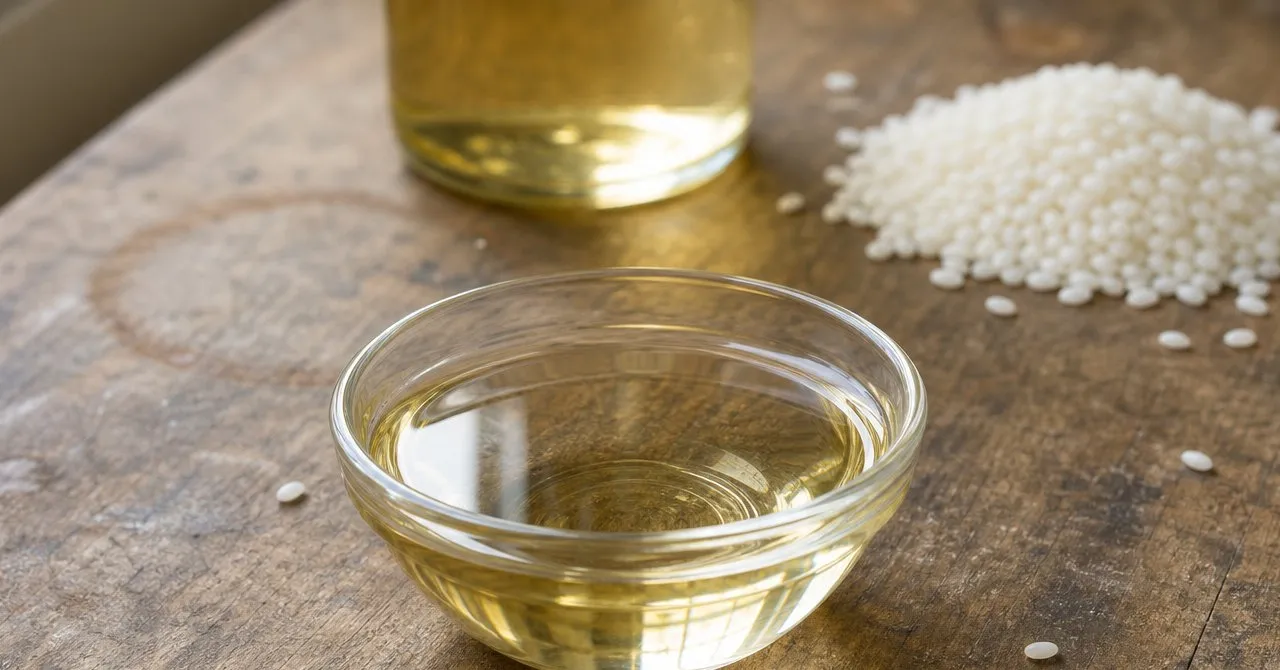
Mirin is the clearest case. The standard English substitution — rice vinegar plus sugar — adds sourness to a dish that had none. Hon-mirin (本みりん) is a sweet rice seasoning of about 14% alcohol and roughly 45% sugar. In traditional hon-mirin that sugar is produced by rice koji, whose enzymes break down the starch in glutinous rice; some mass-market hon-mirin also adds sugars. Sourness is not part of its design.
Japanese manufacturers do sell a sweet seasoning built partly on added acid: みりん風調味料, “mirin-style seasoning.” It is legally a food, not mirin — Japan’s Liquor Tax Act classifies mirin as an alcoholic beverage — and Mizkan’s version lists “brewed vinegar / acidulant” on its label.
So the English-language substitution lands closer to a category Japan sells separately from mirin than to mirin itself.
It gets worse when you check the bottle you already own. Of four widely available US “mirin” products checked for this series, three contain corn syrup, three contain salt, and one contains both vinegar and high-fructose corn syrup. The closest to hon-mirin, Takara’s US mirin, keeps 12% alcohol and is sold as an alcoholic product — but its sugar is added as corn syrup and dextrose rather than produced by koji. None is made the traditional way, from rice, rice koji and shōchū with no salt or vinegar.
→ Rice Vinegar Is Not a Mirin Substitute — Here’s What Actually Works
Mechanism 2: A technique gets translated as a product
Some Japanese culinary words name actions. English tends to receive them as things — usually things you can put in a bottle and sell.
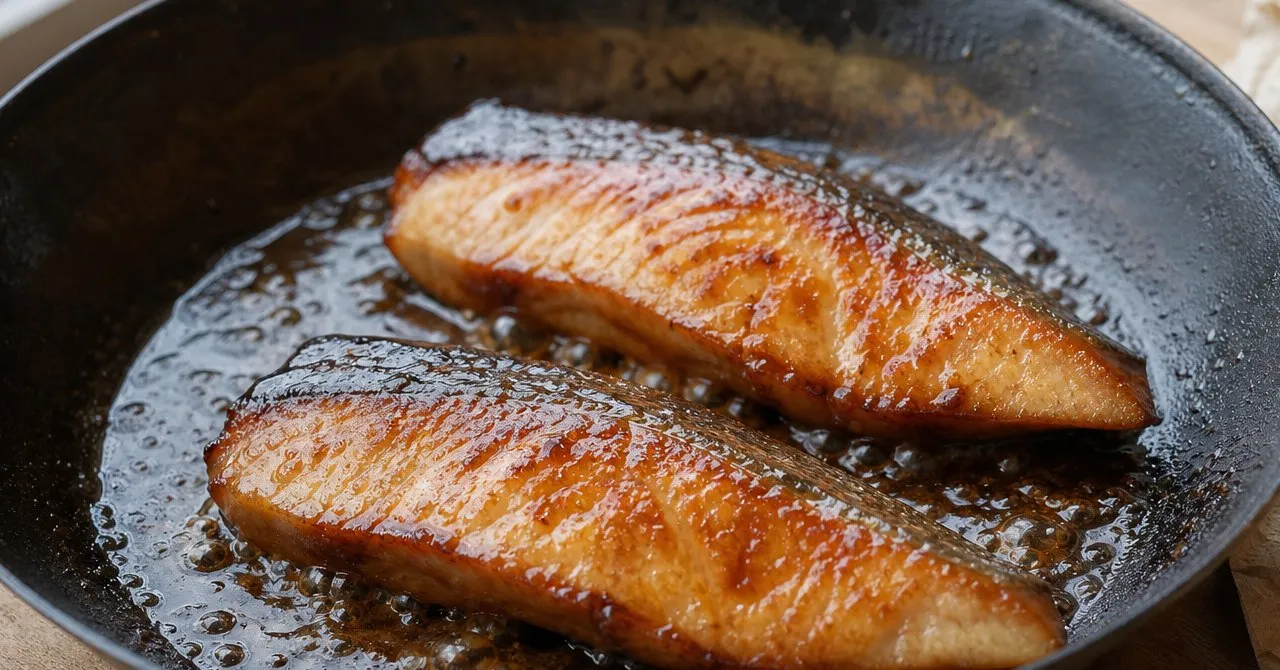
Teriyaki is a technique wearing a product’s clothes. Major Japanese dictionaries define it as a method: food may be dipped in or soaked in the sauce first, but the defining step is brushing or basting it with the sauce while it cooks until a gloss appears. Teri means gloss; yaki means grilled. The name describes what the surface looks like.
In 1961, Kikkoman began exporting a soy-based barbecue sauce developed for the American market, named Teriyaki Barbecue Marinade — and that word, marinade, captures the shift. The soak, a preliminary step in the Japanese method, became the main event. The glaze that gives the dish its name became optional.
Once you see that shift, many downstream differences stop looking random: a sauce designed to soak in before cooking is a different product from one designed to reduce onto the surface at the end.
→ Teriyaki Is Not a Sauce. It’s a Technique.
Mechanism 3: “Authentic” gets attached to the wrong tradition
A great deal of what English speakers call Japanese food is really diaspora food — dishes created by Japanese, Japanese-American, and other immigrant communities abroad. These are legitimate cuisines with documented histories. The error isn’t cooking them; it’s labeling them “authentic Japanese,” which is a claim about origin.
American teriyaki has two often-cited centers, neither of them in Japan:
- Hawaii, mid-1950s. Ernie Morgado and Mike Asagi, partners in a poultry company in ʻEwa, began barbecuing chicken in a teriyaki-style sauce based on a Morgado family recipe — the start of what became huli huli chicken. Morgado never released his recipe. Versions published since typically use pineapple juice, ketchup, soy sauce, honey or brown sugar, sesame oil, ginger, and garlic. Apart from soy sauce, none of those appear in the Japanese dictionary definition.
- Seattle, 1976 onward. Seattle-style teriyaki is generally traced to Toshihiro Kasahara, who opened Toshi’s, a small teriyaki restaurant in lower Queen Anne, in 1976. From the 1980s, Korean-American owners opened and bought many more shops, and by the late 1990s teriyaki restaurants reportedly outnumbered McDonald’s locations in the city. One Japanese food-industry column characterized the result as “Japanese teriyaki, by Koreans, for Americans.”
Huli huli chicken is a real Hawaiian dish. Seattle teriyaki is a real Pacific Northwest institution. Neither is a degraded copy of anything. They’re just not the dish in the Japanese dictionary.
Mechanism 4: Copies of copies
English-language recipe writing tends to cite English-language recipe writing. Each iteration is reasonable; the drift accumulates. And because the sources are in the same language, there’s no natural checkpoint where someone goes back to the original.
Meanwhile the Japanese-language web contains a great deal of material that rarely enters the conversation:
- Manufacturers publish real technical documentation. Takara Shuzo explains that alcohol suppresses pectin dissolution during heating, citing academic literature, with electron micrographs. House Foods explains that roux added to a pot at a full boil forms a flour film and won’t dissolve; S&B adds that wheat starch begins to gelatinize at 140°F (60°C), so it recommends cooling the pot below 176°F (80°C) before the roux goes in. S&B’s R&D division published sensory data on how sauté time changes onion sweetness.
- Government bodies publish standards and ratios. The Ministry of Agriculture publishes seasoning “golden ratios.” Japan’s Liquor Tax Act defines mirin, and the National Tax Agency publishes that definition. JAS sets minimum acidity for vinegar.
- Companies publish their own history, sometimes uncomfortably. Kikkoman’s international food culture center states plainly that “‘Teriyaki’ is a dish developed by Americans” — writing “Teriyaki” in Latin letters, to mean the American version.
None of this is hidden. It’s just in Japanese, and it’s mostly written for domestic consumers who already know the basics — so it seldom gets picked up by writers working in English.
That gap is most of the reason this site exists.
Mechanism 5: A dish gets filed under the wrong family
Sometimes the error isn’t an ingredient or a word. It’s putting the dish on the wrong branch of the tree.
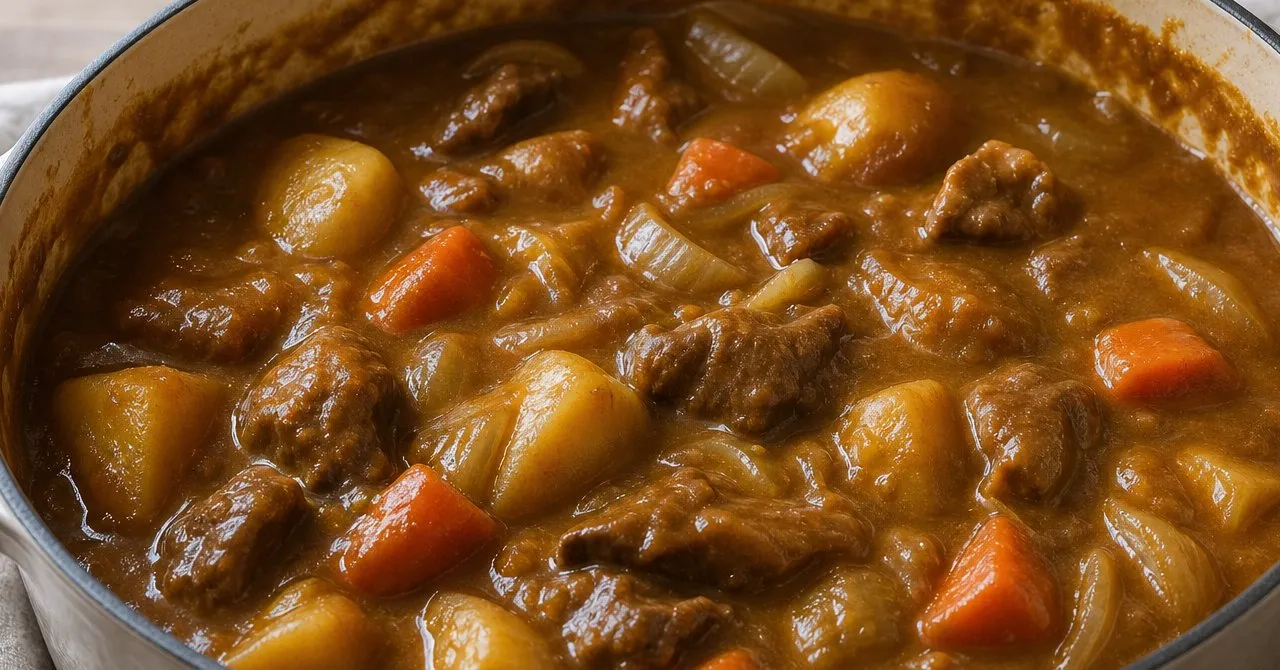
Japanese curry is not a variant of Indian curry. It reached Japan by way of Britain as a flour-thickened, stew-like dish. Japan’s earliest known curry recipes, in two cookbooks from 1872, already contain wheat flour — and appear in books about Western cooking. The 1908 naval cooking manual describes roasting flour in beef suet to a golden “fox color” before adding curry powder: a browned roux, the foundation of French and British brown sauces and stews.
House Foods notes that the word comes from the French roux, “reddish-brown.”
On the family tree, Japanese curry sits much closer to beef stew than to Indian curry. Once you know that, the English advice to combine curry powder with flour stops looking wrong and starts looking merely incomplete — because Japanese home curry is made from commercial roux blocks in which curry powder is the sixth ingredient by weight, behind fat, flour, sugar, salt, and starch.
→ Japanese Curry Is Not Indian Curry. It’s a Stew.
Mechanism 6: Japan gets treated as one kitchen
English recipes say “soy sauce” and “miso” as if each were one thing. In Japan they are families of products, and which member a cook reaches for depends heavily on where they live. It’s a difference that is easy to miss even inside Japan, because each region’s version is simply “soy sauce” to the people who use it.
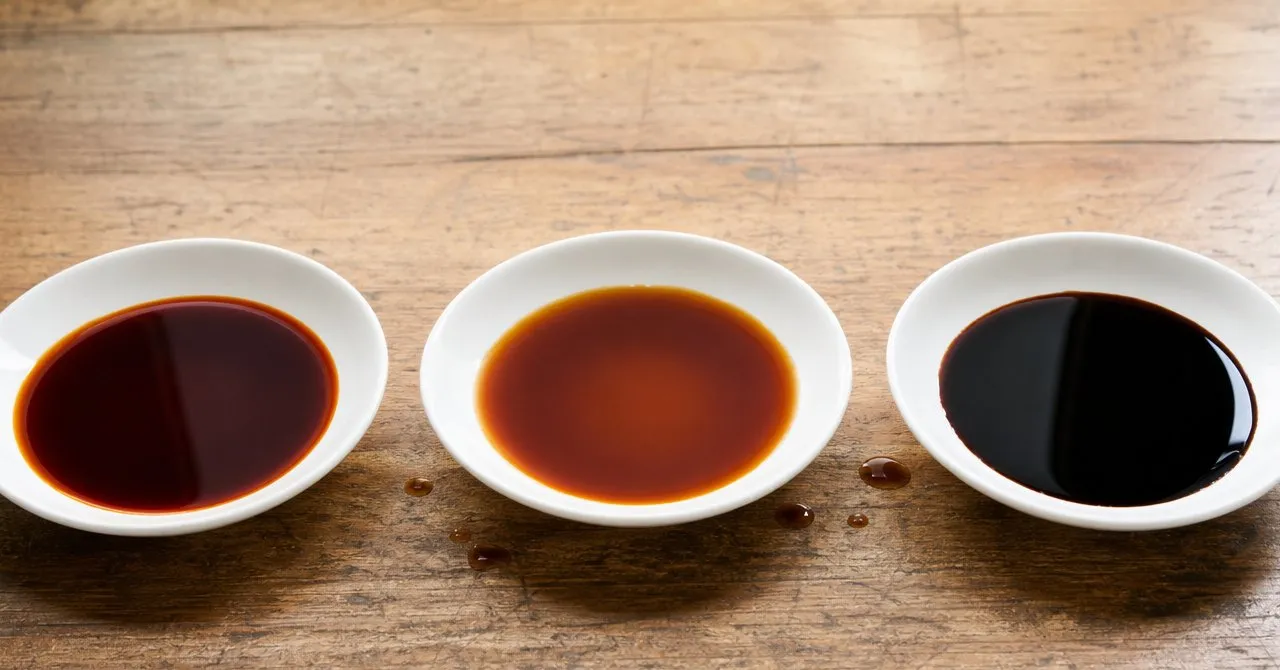
Soy sauce comes in at least five types. According to Japan’s soy sauce industry information center, koikuchi (the dark, all-purpose kind) accounts for about 84% of shipments and usukuchi about 13%; tamari, saishikomi and shiro make up the rest. Usukuchi was born in the Kansai region around Osaka and Kyoto. It is lighter in color — and, counterintuitively, it is made with about 10% more salt than koikuchi, which holds back fermentation and keeps the color pale. “Light” refers to color, not sodium. Tamari is made mainly in the Chūbu region around Nagoya, and the JAS standard allows it to contain a small amount of wheat.
Some regions sweeten their soy sauce. A Kikkoman R&D analysis of supermarket sales data (2011–2013) found that the soy sauce used in Kyushu is “overwhelmingly” sweeter than elsewhere — almost twice the sweetness of the regions that came next, Chūgoku and Shikoku. The sweetness comes from added sugars and licorice-derived sweetener, and the analysis detected amino acid liquid, the base of blended soy sauce, in the regional sample. The timing differs by place: one brewer in Fukuoka’s coal district began selling sweetened soy sauce to miners after weak sales in the 1910s, while researchers trace the wider spread to the war and postwar years, when sweeteners were used in blended soy sauces and Kyushu consumers kept choosing them. The region’s older taste for sugar, along the Edo-period Nagasaki trade route sometimes called the “Sugar Road,” is often cited as background, but the sweet bottles themselves are a 20th-century development. Sweet styles are also found along parts of the Shikoku, Hokuriku and Tohoku coasts. A recipe from a Kyushu home cook, made with a standard koikuchi, may come out noticeably less sweet than intended.
Miso varies just as much. Rice miso makes up about 85% of Japanese production (Ministry of Agriculture, 2020). Barley miso is made mainly in Kyushu and along the Inland Sea coasts of Shikoku and Chūgoku; soybean-only miso, like the dark hatchō miso, belongs to the Tōkai region around Nagoya. Salt ranges widely: Japan’s food composition tables put sweet white miso at about 6 g of salt per 100 g, and red “karakuchi” (salty) miso at about 13 g — more than double. A recipe that says “white miso” may mean either a sweet Kyoto-style miso or a pale but salty one, and the two are not interchangeable.
Color follows the same lines. Japanese often summarize it as higashi no koikuchi, nishi no usukuchi — “dark soy in the east, light soy in the west.” A bowl of udon in Tokyo comes in a dark, soy-forward broth; in Osaka, a pale, dashi-forward one. Nissin even sells its Donbei instant udon in separate eastern and western versions.
The upshot for English-language cooks: when a Japanese recipe tastes wrong, the issue may not be a mistake at all. The recipe may simply have been written for a different region’s soy sauce or miso.
How to read a Japanese recipe more skeptically
Six habits that catch most of it:
Ask whether the word names a dish or a method. Nimono, yakimono and agemono name dishes by how they’re cooked — simmered, grilled, fried — and teriyaki names a finish. If a recipe treats one as a bottled product, something has been flattened.
Check the bottle, not the label on the shelf. Read the ingredient list on anything you’re buying as a Japanese ingredient. Corn syrup, salt, or vinegar in a “mirin” tell you it isn’t traditional hon-mirin.
Be suspicious of “authentic.” Ask authentic to where and when. A dish can be entirely authentic to 1950s Hawaii and have no relationship to Japanese home cooking.
Notice when a substitution has become the recipe. If an ingredient list has no Japanese-specific ingredients in it at all, you may be looking at an accumulation of workarounds rather than a translation.
Check what “cup” means. Japanese measuring spoons match American ones closely (a Japanese tablespoon is 15 mL, a US one about 14.8 mL), but a Japanese measuring cup is 200 mL, about 15% smaller than a US cup. The cup that comes with a Japanese rice cooker is smaller still: one gō, about 180 mL, or roughly ¾ of a US cup. A Japanese recipe that says “1 cup,” measured with an American cup, comes out about 18% heavy.
Ask which region the recipe comes from. “Soy sauce” in a Kyoto recipe often means usukuchi; in a Kyushu recipe it may mean a sweetened soy sauce. “Miso” can mean anything from a 6% sweet white miso to a 13% red one.
The series
- Rice Vinegar Is Not a Mirin Substitute — What mirin actually is, why the standard substitution adds an ingredient it doesn’t contain, and how to check whether your bottle is the real thing.
- Teriyaki Is Not a Sauce — A technique, not a product. Where American teriyaki actually came from, and how glazing works.
- Japanese Curry Is Not Indian Curry — A British-route stew in disguise, what’s really inside a roux block, and a from-scratch method built on manufacturers’ published guidance.
More coming. If there’s a dish you’ve never been able to make taste right, let us know.
How this article was researched
This overview summarizes the three articles in the series, and its figures trace to the Japanese-language and official sources listed below and in each article. Survey and market figures, where they appear, are reported with their year and basis. Quotations are kept short and translated by us. Product details for US mirin come from the manufacturers’ own labels and listings.
Sources
- 国税庁 — 酒税のしおり 2025(酒類の分類及び定義)
- キッコーマン — 本みりん/みりん風調味料/みりんタイプ調味料の違い
- ミツカン FAQ — ほんてり
- Takara Sake USA — Takara Mirin (Gourmet Seasoning Sake)
- Kikkoman USA — Kotteri Mirin
- 宝酒造 — 煮崩れ~その要因と防止する方法~
- 農林水産省 — 伝統調味料は「黄金比」で手間いらず
- 農林水産省 — 醸造酢の日本農林規格
- コトバンク — 照焼(日本国語大辞典・デジタル大辞泉)
- キッコーマン国際食文化研究センター — KIKKOMANのおいしい挑戦~アメリカ進出50周年~
- Wikipedia — Huli-huli chicken
- Honolulu Advertiser — Huli-Huli chicken creator Ernest Morgado dies at 85 (2002)
- HistoryLink — A Taste of History: Teriyaki in Seattle
- 日本食糧新聞 — Glaze Teriyaki シアトルスタイルのテリヤキ
- ハウス食品 — Q. なぜいったん火を止めてからルウを入れるのですか
- ハウス食品 — Q. ルウ(ROUX)とは何ですか
- ハウス食品 — バーモントカレー〈中辛〉商品カタログ(原材料名)
- S&Bカレー.com — なぜ一度火を止めてからルウを入れるの?
- エスビー食品 研究開発 — 具材とカレーライスの味な関係(2) 玉ねぎ
- カレーライス — Wikipedia (ja)
- しょうゆ情報センター — しょうゆの種類
- 農林水産省 — しょうゆの日本農林規格(JAS 1703)
- キッコーマン FOOD CULTURE No.26 — しょうゆの地域特性(大友ほか)
- キッコーマン FOOD CULTURE No.26 — 郷土料理からみた醤油の地域特性(福留・宇都宮)
- 農畜産業振興機構 砂糖類情報 — 九州の甘い醤油(宇都宮由佳, 2022)
- 農林水産省 — みその種類別生産量(2022年2月資料)
- 愛媛県産業技術研究所 — 麦みその成分(食品成分表の値を引用, 2015)
- JAL SKYWARD+ — 東の濃口、西の淡口
- グルメWatch — どん兵衛の東西の違い(2021)
- 香川栄養学園 — 味のものさし(計量カップ・スプーンの試作、1948年)
- NIST Handbook 44, Appendix C — US customary units
- パナソニック 炊飯器取扱説明書 — 計量カップ約180mL