Cooking Japanese Recipes in an American Kitchen
Japanese measuring spoons nearly match US ones, but a Japanese cup is 200 mL and a rice-cooker cup is 180 mL. How to convert recipes for a US kitchen.
You found a Japanese recipe, or an English translation of one, and it calls for “1 cup” of dashi, “2 cups” of rice and “1 tbsp” of sugar. Every one of those words means something slightly different in Japan than it does in the US. Some of the differences are too small to matter. One of them is big enough to throw off a sauce, and another can leave a pot of rice short on water.
The short version: Japanese measuring spoons are effectively the same as yours. A Japanese cup is not. And a rice-cooker cup is something else again. Below are the numbers, where they come from, and what to do about each one. Further down we cover the parts of a Japanese kitchen that recipes take for granted: the small oven, the fish grill and the exhaust fan.
Recipes on this site link here, so you can come back whenever a measurement looks off.
The short answer
- Spoons are about the same. A Japanese tablespoon is 15 mL and a teaspoon is 5 mL. US spoons are about 14.8 mL and 4.9 mL. Use your US spoons as they are.
- A Japanese cup is 200 mL. A US cup is about 236.6 mL. If you measure a Japanese “1 cup” with a US cup, you get about 18% too much. One Japanese cup is about ¾ US cup + 1½ tbsp.
- A rice-cooker cup (1 gō) is about 180 mL, or about ¾ US cup. For rice, use the cup that came with your rice cooker, not a US measuring cup.
- Sugar isn’t the same sugar. Japanese recipes usually mean jōhakutō, Japan’s everyday white sugar, at about 3 g per teaspoon. Granulated sugar, the US standard, is about 4 g per teaspoon. When the amount matters, weigh it.
Measuring spoons: close enough to ignore
| Japan | US (customary) | Difference | |
|---|---|---|---|
| Tablespoon (ōsaji) | 15 mL | about 14.79 mL | Japanese is about 1.4% larger |
| Teaspoon (kosaji) | 5 mL | about 4.93 mL | Japanese is about 1.4% larger |
The US figures come from the definition of the US fluid ounce in NIST Handbook 44, the federal weights-and-measures reference: a tablespoon is half a fluid ounce and a teaspoon is a third of a tablespoon. NIST itself rounds them off. Its unit table lists the tablespoon as 15 mL and the teaspoon as 5 mL, noting that these “imprecise units” are “rounded to the nearest milliliter.” If NIST’s own table rounds the US tablespoon to 15 mL, you can safely use it for a Japanese 15 mL tablespoon.
Where the Japanese spoons came from
Japan’s standard cup and spoons trace back to Kagawa Aya (1899–1997), the founder of Kagawa Nutrition University (Joshi Eiyō Daigaku). According to a history published by the Kagawa Education Institute of Nutrition, the school corporation that runs the university, home measuring in postwar Japan was a mess. Japan had adopted the metric system, but people still used the old shakkanhō units, and pounds had arrived from America on top of that. There were no measuring cups yet; people used traditional masu measures sized at one gō or one shō. Spoon sizes weren’t fixed by law, and they varied. The institute’s history mentions dessert spoons that held 13 cc.
Kagawa wanted to standardize kitchen measurement in metric, so that cooks could season by measuring and get the same result every time. The institute’s history records the first prototypes:
「1948(昭和23)年に、綾は、新潟県の燕市で、計量カップ200ccと、計量スプーン30cc、15cc、5cc の3種類を試作して、実際に使ってみました。」 “In 1948, in Tsubame, Niigata, Aya made trial versions of a 200 cc measuring cup and three measuring spoons, 30 cc, 15 cc and 5 cc, and tried them out.” — Kagawa Education Institute of Nutrition, Aji no monosashi
The 30 cc spoon didn’t last. After talking with officials from the Ministry of Education and the Ministry of Agriculture and Forestry, Kagawa narrowed the set to 15 cc and 5 cc on the reasoning that fewer sizes would be easier to spread.
The sources don’t say why Kagawa chose these exact sizes, and they don’t say she copied American spoons. What we can say is that the Japanese spoons ended up almost identical to US measuring spoons. Whatever the reason, that close match is why your spoons work fine for Japanese recipes.
The Japanese cup: 200 mL, and this is the one that matters
A Japanese measuring cup (keiryō kappu) holds 200 mL. The US customary cup is 8 US fluid ounces, about 236.6 mL. NIST Handbook 44 rounds it to 237 mL.
You’ll also see 240 mL. That number comes from US food labeling. The FDA’s rule (21 CFR 101.9) says that “for purposes of nutrition labeling, 1 cup means 240 mL.” NIST’s own “Metric Kitchen” chart also uses 240 mL as a rounded equivalent. The 240 figure is a convenient labeling and conversion convention. It doesn’t change the size of the measuring cup in your drawer.
Either way, the gap is real. A Japanese cup measured in a US cup comes out about 18% too large (20% if you go by the 240 mL figure). In a simmering liquid built on dashi, soy sauce and mirin, an extra 18% of one ingredient can shift the balance of the whole mix.
Japanese cups to US measures
| Japanese recipe says | Milliliters | US cups (decimal) | In US measures |
|---|---|---|---|
| ¼ Japanese cup | 50 mL | 0.21 | about 3 tbsp + 1 tsp |
| ½ Japanese cup | 100 mL | 0.42 | about ⅓ cup + 1½ tbsp |
| ¾ Japanese cup | 150 mL | 0.63 | about ½ cup + 2 tbsp |
| 1 Japanese cup | 200 mL | 0.85 | about ¾ cup + 1½ tbsp |
| 1½ Japanese cups | 300 mL | 1.27 | about 1¼ cups |
| 2 Japanese cups | 400 mL | 1.69 | about 1⅔ cups + 1 tsp |
| 3 Japanese cups | 600 mL | 2.54 | about 2½ cups + ½ tbsp |
| 5 Japanese cups | 1,000 mL | 4.23 | about 4¼ cups |
The simplest fix is a measuring cup with milliliter markings. Most US liquid measuring cups have them. Read the mL line and skip the conversion.
Watch for “1 cup” in English translations
Some English-language Japanese recipes keep the Japanese cup and still call it a cup. A dashi recipe posted on Cookpad’s US site by its Japan account, for example, says “For 1 cup (200 ml) worth.” That’s helpful if you notice the milliliters, but a reader who sees only “1 cup” will grab a US cup. Bilingual reference sources don’t always agree on the US figure either. A Japanese-English learner’s dictionary describes the US cup as “approximately 240ml,” which is the labeling figure.
The rule: whenever a Japanese recipe says “cup,” look for the milliliters and measure those. If there are no milliliters and the recipe comes from a Japanese source, assume 200 mL. (On this site, we always give milliliters first. For more of this kind of drift, see What English-language Japanese recipes get wrong.)
The rice-cooker cup: 180 mL
Rice has its own unit. A Japanese recipe that says “2 gō” of rice, or that lists rice in “cups” next to a rice cooker, means the traditional gō, about 180 mL. The figure comes from Japan’s old volume system, where 10 gō make one shō, and it survives today as the size of the cup sold with rice cookers.
Japanese rice-cooker manufacturers build their machines around it:
- Panasonic’s rice-cooker manual lists the included accessory as a “measuring cup (about 180 mL)” and gives rice amounts as “about 180 mL per gō.”
- Mitsubishi Electric’s manual describes its measuring cup as about 180 mL, or about 150 g of rice, and states it plainly: 「計量カップすりきり1杯で、約1合です」 (“One level measuring cup is about 1 gō”).
- Mitsubishi also includes a second, smaller cup for musenmai (rinse-free rice), about 170 mL, or about 147 g. The smaller cup holds nearly the same weight of rice as the regular one.
- Aroma Housewares, a US rice-cooker brand, also uses a 180 mL rice cup. If you lose it, the company suggests substituting a ¾ US measuring cup.
| Rice-cooker cups (gō) | Milliliters | Approx. US measure | Approx. uncooked weight |
|---|---|---|---|
| 1 | 180 mL | ¾ cup | 150 g |
| 2 | 360 mL | 1½ cups | 300 g |
| 3 | 540 mL | 2¼ cups | 450 g |
| 5 | 900 mL | 3¾ cups | 750 g |
Weights are calculated from Mitsubishi’s figure of about 150 g per 180 mL cup of regular rice.
Using the right cup matters because of the water lines. The lines inside a rice cooker’s inner pot are marked in gō, so they assume you measured with the matching 180 mL cup. Measure 3 US cups of rice (about 710 mL) and fill to the “3” line, and you have about a third more rice than the water line was set for, with too little water for that much rice.
So: use the cup that came with your rice cooker, and fill to the line with the same number. If you’ve lost it, use ¾ US cup per rice-cooker cup, or weigh about 150 g. For the full method, see How to cook Japanese rice.
Sugar and weights: why a scale helps
A teaspoon is a teaspoon, but what goes in it varies. Japanese recipes that say “sugar” (satō) usually mean jōhakutō, a moist, fine-grained white sugar. Japan’s Ministry of Agriculture, Forestry and Fisheries describes it as the type of sugar the country produces most. The granulated sugar standard in the US is called guranyūtō in Japan. The Kagawa Education Institute of Nutrition’s spoon-weight table, drawn from its university press’s cooking reference data, gives these weights:
| Per tsp | Per tbsp | |
|---|---|---|
| Jōhakutō (Japanese white sugar) | 3 g | 9 g |
| Granulated sugar | 4 g | 12 g |
Japan’s National Institute of Health and Nutrition uses the same figures in its weight guide for the national nutrition survey. On the US side, USDA’s dietary surveys define one teaspoon equivalent of added sugars as 4.2 g. So a spoonful of granulated sugar weighs about a third more than the same spoonful of jōhakutō. A Japanese recipe calling for 3 tbsp of sugar was written for about 27 g. Measure 3 tbsp of granulated sugar and you’re closer to 36 g. In a simmered dish or a glaze that’s sweet already, it adds up.
Two practical fixes:
- If the recipe gives grams, weigh. That removes the spoon question entirely.
- If it gives only spoons, measure a little short with granulated sugar (about ¾ of the amount gets you to the same weight), then taste and adjust.
A digital kitchen scale that reads in 1 g steps and has a tare (zero) button makes all of this simpler. It handles sugar, salt, rice and flour without any conversion. Salt is the other ingredient worth weighing whenever a recipe gives grams.
Stoves and ovens: a different kitchen
Japanese recipes assume Japanese equipment, and a typical Japanese home kitchen is set up differently from an American one.
Burners, and a small oven
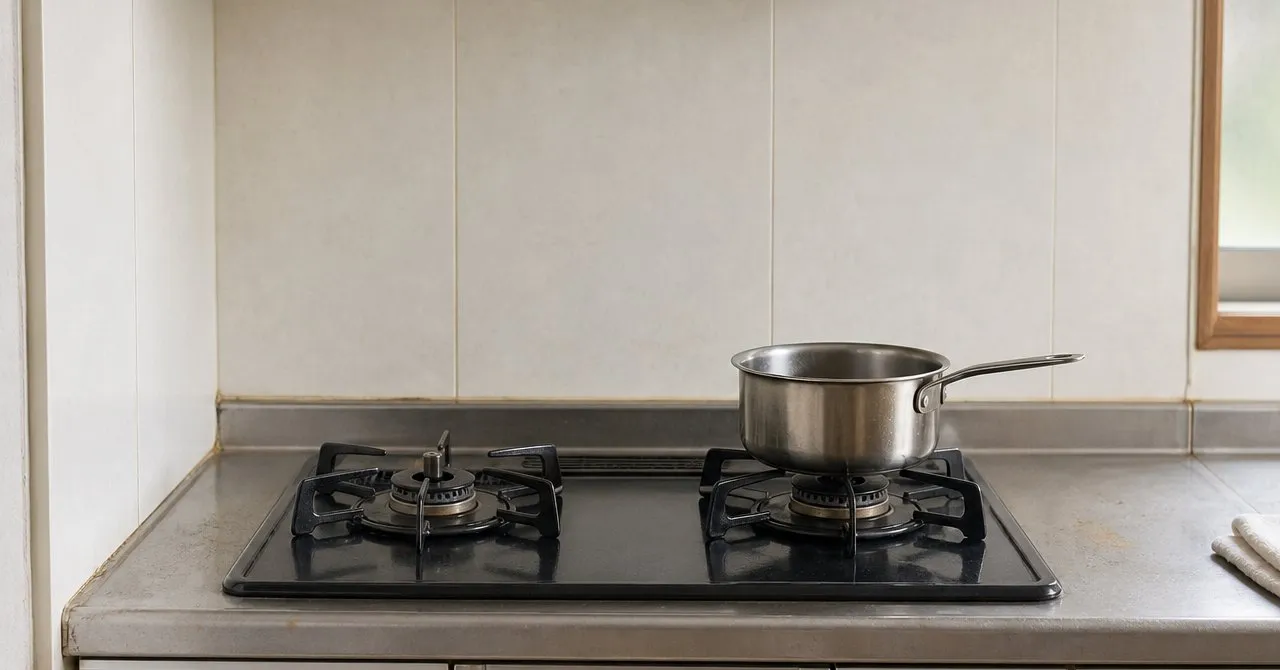
Many Japanese homes cook on a built-in two- or three-burner cooktop rather than a full range with an oven underneath. In many homes the oven is a countertop unit, often a microwave that also works as a convection oven (ōbun renji), rather than a large built-in oven.
National statistics on this are thin. The Cabinet Office stopped tracking microwave ownership in its consumer survey in 2004. The clearest numbers come from an older survey by Noritz, a Japanese gas-appliance maker. Taken in 2006 with a small sample (373 women), it found:
- 98.9% owned a microwave.
- 16.9% owned a gas oven. Among those who owned any oven, about three-quarters had an electric one.
- 68% had a three-burner cooktop and 19% had a two-burner one.
Treat these as a snapshot from 2006, not current figures. They suggest that gas ovens were uncommon and that most ovens were electric, but they don’t measure oven size or type in detail.
What this means for you: a Japanese recipe’s oven time and temperature may have been set for a smaller oven than yours, and your oven may heat up and brown differently. Convert the temperature (for example, 200°C is about 390°F), preheat fully, and then trust the doneness cues in the recipe, like color, bubbling or a skewer coming out clean, more than the timer. Check early.
The fish grill
Japanese gas cooktops commonly have a small built-in fish grill: a shallow broiler drawer under the cooktop. It’s covered by the Japanese gas-appliance industry’s safety standard, which requires an automatic shut-off if the grill is left on. When a Japanese recipe says to cook salmon, mackerel or yellowtail in the “grill” (gurīru), this is what it means, not an outdoor grill.
What this means for you: use your oven’s broiler. Put the fish on a rack over a foil-lined pan, set it close to the heat, and watch it, since broilers vary a lot. Turn on the range hood first (more on that below).
Safety devices and deep-frying
Since October 2008, Japanese law has required household gas cooktops to have two safety devices. One is an oil-overheating sensor that cuts the flame before cooking oil reaches about 572°F (300°C). The other is a flame-failure device that shuts off the gas if the flame goes out. Japan’s product-safety agency, NITE, says so in its 2018 release. (Single-burner tabletop units and commercial cooktops are exempt.) The Tokyo Fire Department notes that household gas cooktops made since 2008 carry “Si sensors,” its collective name for the overheat-prevention, flame-failure and forgot-to-turn-off shut-off devices.
A Japanese recipe for tempura or karaage gives oil temperatures, such as 340°F (170°C) or 355°F (180°C). A cook in Japan following it on a post-2008 gas cooktop has the automatic cutoff as a backstop.
What this means for you: whatever your stove has, a deep-fry or instant-read thermometer is the reliable way to hit the temperature a Japanese frying recipe calls for. It also lets you see if the oil is climbing too high. Clip it to the pot and keep the heat steady.
Ventilation: required by law in Japan, varies in the US
Japan
Japan’s Building Standards Act, Article 28(3), requires ventilation equipment in kitchens and other rooms fitted with a stove, burner or other fire-using appliance, except in cases set by cabinet order. It has to meet technical standards set by government order. The required airflow is calculated from how much fuel the appliances burn. Under the guidance published by the city of Sapporo, the formula requires less airflow when the stove has an exhaust hood, and less still with a better-designed hood. Tokyo’s Ōta City puts it simply: the size of a kitchen’s exhaust fan has to be set by how much fuel the gas appliances burn.
Note what the law does and doesn’t say. It requires ventilation. It doesn’t specifically require a range hood, and we couldn’t find reliable statistics on how many Japanese kitchens have one. What is clear is that Japanese law treats ventilation as a requirement for kitchens with gas burners, not an option. A Japanese recipe for grilled fish or a hard sear may not mention the exhaust fan at all.
The US
There’s no single national rule. The US uses model codes that states and cities adopt and amend:
- International Residential Code (IRC): The 2006 edition checked for this article (New Jersey’s adopted version) regulates range hoods where they are installed. Ducted hoods must vent outdoors through an airtight duct with a backdraft damper, and kitchen exhaust is sized at 100 cfm intermittent or 25 cfm continuous. Its exhaust chapter contains no general requirement that every kitchen have exhaust. We haven’t confirmed how later editions handle this, and local rules vary.
- California: The state’s energy code (Title 24, Part 6) requires all dwelling units to meet the ASHRAE 62.2 ventilation standard, with state modifications. The 2025 standards’ compliance form for new homes checks kitchen local exhaust: either demand-controlled or continuous, with a minimum continuous airflow based on kitchen volume and capture-efficiency requirements based on home size and fuel type. In effect, new California homes need kitchen exhaust. That’s a state rule, not a national one.
What this means for you: before a high-heat sear, a broiled fish or a pot of frying oil, turn on the range hood. If you don’t have a hood, or yours just recirculates the air, open a window. The Japanese recipe probably won’t remind you.
FAQ
How many US cups is a Japanese cup?
A Japanese cup is 200 mL, about 0.85 US cup, or ¾ US cup + 1½ tbsp. A US cup is about 236.6 mL. The easiest approach is to measure 200 mL using the milliliter markings on a US liquid measuring cup.
Is a rice-cooker cup the same as a measuring cup?
No. A rice-cooker cup holds about 180 mL (one gō), close to ¾ US cup. Japanese makers such as Panasonic and Mitsubishi Electric, and the US brand Aroma, all use a 180 mL rice cup. The water lines in the cooker assume you used that cup.
I lost my rice-cooker cup. What do I use?
Use ¾ US cup per rice-cooker cup, which is what Aroma suggests, or weigh about 150 g of uncooked rice per cup. Then fill the water to the line matching the number of rice-cooker cups.
Can I use American measuring spoons for Japanese recipes?
Yes. A Japanese tablespoon is 15 mL and a teaspoon is 5 mL. US spoons are about 14.8 mL and 4.9 mL, and NIST itself rounds them to 15 and 5 mL. The difference is too small to matter.
Is Japanese sugar the same as US sugar?
Not quite. Japanese recipes usually mean jōhakutō, about 3 g per teaspoon. Granulated sugar is about 4 g per teaspoon (USDA counts 4.2 g), so the same spoon measure carries about a third more sugar by weight. Weigh the sugar if the recipe gives grams, or use about ¾ of the spoon amount.
What do I use instead of a Japanese fish grill?
Use your oven’s broiler. Put the fish on a rack over a lined pan near the heat source, watch it closely, and run the range hood.
How this article was researched
This page is built mainly on Japanese-language primary sources: the Kagawa Education Institute of Nutrition’s history of the Japanese measuring cup and spoons and its spoon-weight table, rice-cooker manuals from Panasonic and Mitsubishi Electric, Japan’s Building Standards Act and city building guidance, and safety releases from NITE and the Tokyo Fire Department. US figures come from NIST, the FDA, USDA, the International Code Council and the California Energy Commission. Japanese quotations were translated by us, and the conversion tables are calculated from the cited volumes. The 2006 Noritz equipment survey is old and based on a small sample, and we’ve labeled it that way. The cooking adjustments (broiler for fish grill, watching doneness in a larger oven, using a thermometer for frying) are general guidance drawn from these sources and have not been kitchen-tested by this site.
Sources
- 味のものさし と 計量スプーン 計量カップ — Kagawa Education Institute of Nutrition, history of the Japanese measuring cup and spoons, with spoon-weight table (PDF)
- 香川綾の軌跡 — Kagawa Education Institute of Nutrition, the life of Kagawa Aya
- 香川綾の98年の生涯 — Kagawa Education Institute of Nutrition, timeline of Kagawa Aya’s life, 1899–1997 (PDF)
- 塩少々、塩ひとつまみを、計ってみました — Kagawa Nutrition University, measuring “a pinch of salt” (includes c. 1948 prototype cup and spoons)
- NIST Handbook 44 (2023), Appendix C — General tables of units of measurement (PDF)
- NIST — Metric Kitchen: cooking measurement equivalencies
- FDA — Guidelines for Determining Metric Equivalents of Household Measures
- IHジャー炊飯器 SR-HX104/HB104・SR-HX184/HB184 取扱説明書 — Panasonic rice-cooker manual (PDF)
- IHジャー炊飯器 NJ-KE10/KE18 取扱説明書 — Mitsubishi Electric rice-cooker manual (PDF)
- What’s the REAL Rice Cup Size? — Aroma Housewares
- 『栄養摂取状況調査のための標準的図版ツール』に基づく重量目安表 — National Institute of Health and Nutrition, weight guide for the 2008 National Health and Nutrition Survey (PDF)
- Added Sugars Intake of Americans: What We Eat in America, NHANES 2013–2014 — USDA Agricultural Research Service, Dietary Data Brief No. 18 (PDF)
- aff 2021年11月号 砂糖の魅力再発見 — Ministry of Agriculture, Forestry and Fisheries, feature on sugar types (PDF)
- 審査基準(建築基準法第28条第3項) — Aomori Prefecture, text of Building Standards Act Art. 28(3)
- 建築確認手引 第2章第3節 — City of Sapporo, building permit guide: ventilation for fire-using rooms (PDF)
- 建築設備 — Ōta City, Tokyo, building equipment guidance
- International Residential Code 2006, New Jersey Edition, Chapter 15: Exhaust Systems — ICC (PDF)
- CF3R-MCH-32-H Local Mechanical Exhaust — California Energy Commission, 2025 Standards compliance form
- 消費動向調査 統計表一覧 — Cabinet Office, consumer confidence survey tables
- 調理機器に関する調査 — Noritz, cooking appliance survey, 2006 (PDF)
- ガスこんろから目を離さずに! — NITE, gas cooktop safety release, 2018 (PDF)
- 令和5年版 火災の実態 — Tokyo Fire Department, fire statistics report (PDF)
- How To Make a Small Amount of Dashi Stock — Cookpad (US)
- 計量カップ — TKG Japanese-English Learner’s Dictionary
- Cup (unit) — Wikipedia