"Sushi Grade" Isn't an Official Grade: What US and Japanese Rules Actually Cover
We found no US federal definition of "sushi grade." What FDA freezing guidance says, what Japan's raw-use label covers, and what to ask before buying raw fish.
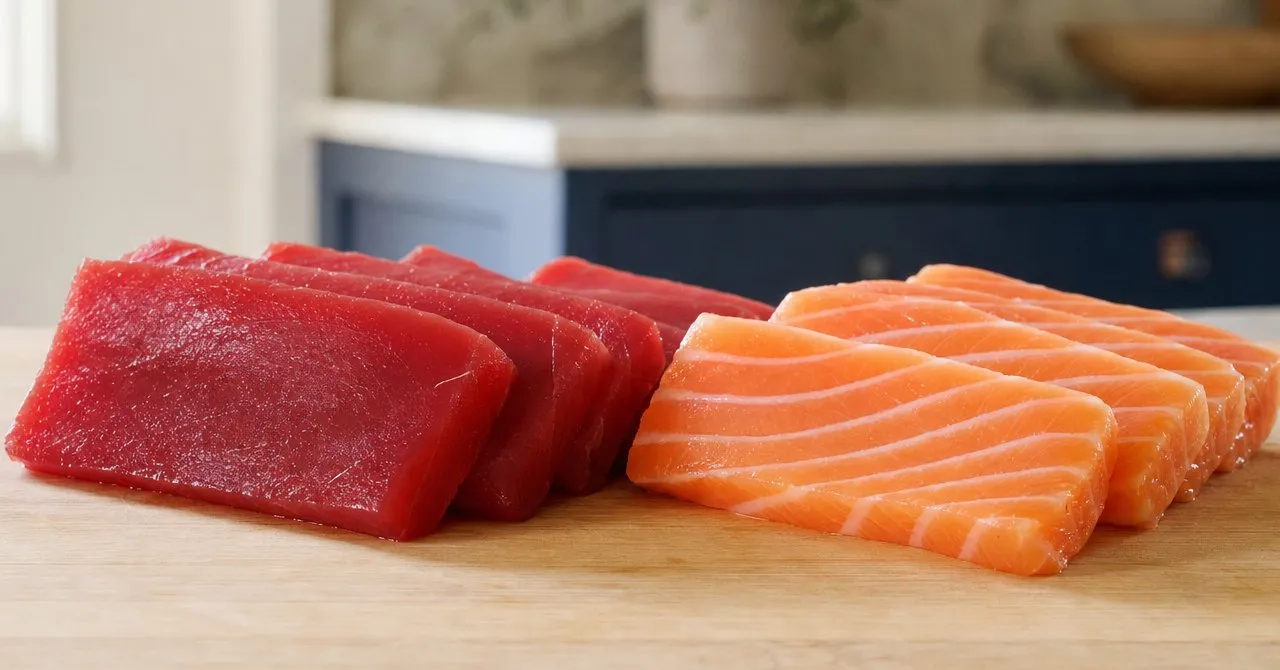
If you want to make sashimi or poke at home, sooner or later a fish counter or website tells you to buy “sushi grade” fish. It sounds like an official grade, the way beef has USDA Prime. It isn’t. We found no US federal definition of “sushi grade” or “sashimi grade,” and the FDA’s guidance on parasites in fish doesn’t use either term.
What does exist, in both countries, is more specific than a label. In the US, FDA guidance sets freezing times and temperatures that kill parasites in fish meant to be eaten raw. In Japan, cut fish and shellfish sold for raw eating are labeled 生食用 (seishoku-yō, “for eating raw”) or 刺身用 (sashimi-yō, “for sashimi”). But the national standard behind that label is about bacteria, not parasites. Japan’s parasite guidance lives elsewhere, and its freezing numbers differ from the FDA’s.
So the practical answer is short. Buy fish that is sold for raw consumption, from a seller who can tell you how it was frozen, or why it didn’t need to be. The rest of this article explains what each country’s rules say, and what they don’t.
The short answer
- “Sushi grade” is a seller’s term. No US federal source we reviewed defines it.
- The FDA’s parasite controls are about freezing, such as −4°F (−20°C) or below for 7 days in total.
- Japan’s raw-use label rests on a bacteria standard (Vibrio parahaemolyticus, 腸炎ビブリオ). The documents we read set no parasite requirement.
- Japan’s parasite guidance is separate. Its health ministry (MHLW) tells businesses to freeze fish at −4°F (−20°C) for at least 24 hours, or to cook it.
- Farmed salmon is a special case in both countries, but only when it’s raised on parasite-free feed. Neither country’s sources call all farmed salmon risk-free.
Where “sushi grade” comes from, and what it isn’t
We looked for an FDA statement that “sushi grade” is unregulated and didn’t find one. What we can say is narrower: the term appears neither in the parasite chapter of the FDA’s Fish and Fishery Products Hazards and Controls Guidance nor on the FDA’s consumer seafood-safety page. Both treat sushi and sashimi as foods, never as grades.
Some English-language pages get this right. PBS Food’s “The Myth of Sushi-Grade,” by Marc Matsumoto, says “in the US, there’s no regulation around the use of the phrase, so it can be used to describe anything.” A grocery-advice site, The Grocery Store Guy, calls it “a marketing term; it is not backed by legislation.” The same page, though, says sushi-grade fish is “flash-frozen on the boat after being caught, per USDA guidelines.” The freezing guidance for seafood parasites comes from the FDA, not the USDA. The page also gives “-20 degrees Fahrenheit for at least 30 to 48 hours,” which doesn’t match any of the FDA’s three options. To be fair to it, the page also lists the FDA’s three options correctly and says plainly that the term is “not backed by legislation.”
What the FDA actually says
Freezing to kill parasites
Chapter 5 of the FDA’s hazards guidance covers parasites, naming roundworms such as Anisakis and listing sashimi and sushi among implicated products. For fish that will be eaten without thorough cooking, it gives three freezing options. All temperatures are ambient, meaning the air in the freezer:
| Option | FDA conditions |
|---|---|
| 1 | Freeze and store at −4°F (−20°C) or below for 7 days (total time) |
| 2 | Freeze at −31°F (−35°C) or below until solid, then store at −31°F (−35°C) or below for 15 hours |
| 3 | Freeze at −31°F (−35°C) or below until solid, then store at −4°F (−20°C) or below for 24 hours |
The guidance adds a caveat: “these conditions may not be suitable for freezing particularly large fish (e.g., thicker than 6 inches).” That’s about 15 cm.
These are process controls written for seafood processors. We found no FDA page that tells home cooks how to freeze fish for raw eating, and this article doesn’t either.
What reaches the store and restaurant
Restaurants and stores follow state and local retail food rules, for example:
- South Carolina’s retail food regulation lists the same three freezing options. It accepts “a letter of certification from the supplier stating the fish was frozen solid” to the required time and temperature in place of the store’s own freezing records. Records are kept for at least 90 days after the last product of each lot is sold.
- Maricopa County, Arizona, in an archived parasite-destruction FAQ, lists the same options. It says a supplier’s written statement should be dated and updated yearly.
Both rules exempt some products from freezing, including molluscan shellfish, certain tuna species, and some farm-raised fish (see below). The two lists aren’t worded identically, so check your own state’s rules rather than assume.
This is why the most useful question at a fish counter isn’t “Is this sushi grade?” It’s “Was this frozen for parasites, and can you tell me how?” Under rules like these, a business serving raw fish is expected to have the supplier’s freezing statement or its own freezing records, unless the fish is exempt, and farmed fish need a supplier statement on how they were raised and fed.
What the FDA tells consumers
The FDA’s consumer seafood page says “if you choose to eat raw fish anyway, one rule of thumb is to eat fish that has been previously frozen,” and notes that freezing “will kill any parasites that may be present.” It also warns that “freezing doesn’t kill all harmful germs,” and says “the safest route is to cook your seafood.”
The same page lists pregnant women, children, older adults and people with weakened immune systems among those who should avoid raw or undercooked seafood, giving sashimi as an example.
What Japan’s “for raw eating” label actually covers
The label
A prefectural guide to Japan’s food labeling law, from Aomori Prefecture, states the rule:
生食用のものは、生食用である旨を表示します。 — Products for raw eating are labeled to say they are for raw eating. — Aomori Prefecture, food labeling guide
The guide gives 生食用 (“for raw eating”), 刺身用 (“for sashimi”) and “can be eaten as is” as example wordings. Frozen fillets that aren’t meant to be eaten raw carry wording such as 加熱用 (“for cooking”). Fish that was frozen and then thawed is labeled 解凍 (kaitō, “thawed”), and farmed fish that was fed is labeled 養殖 (yōshoku, “farmed”).
That’s more than “sushi grade” tells an American shopper.
The standard behind it is about bacteria
The safety standard for raw-use fresh seafood (生食用鮮魚介類) dates to 2001. An MHLW document on the standard is titled, in short, measures to prevent Vibrio parahaemolyticus food poisoning from raw seafood products. According to that document and the city of Sendai’s food-safety page, the standard covers raw-use fillets and slices, shucked shellfish and frozen raw-use seafood. It sets:
| Item | Japan’s raw-use seafood standard |
|---|---|
| Bacteria limit | Vibrio parahaemolyticus: most probable number of 100 or fewer per gram |
| Storage | Refrigerated at 50°F (10°C) or below; frozen products at 5°F (−15°C) or below |
| Processing | Wash well in potable water and remove parts likely to contaminate the product, such as gills and scales |
| Labeling | State that the product is for raw eating; for chilled product, that it must be kept at 50°F (10°C) or below |
The document’s table (1995–2012) shows the context: reported Vibrio parahaemolyticus outbreaks were highest in 1998, with 839 incidents and 12,318 patients, three years before the standard was set. By 2012 they were down to 9 incidents and 124 patients.
Neither document mentions parasites. Based on the sources we read, a 刺身用 label tells you the fish was sold and handled for raw eating under a bacteria standard. It doesn’t certify that the fish was frozen or checked for parasites.
Japan’s parasite guidance: Anisakis
In Japan, the parasite that matters most for raw fish is Anisakis. MHLW describes the larvae as about 2–3 cm (¾–1¼ inches) long and 0.5–1 mm wide, like a slightly thick white thread. Its list of host species includes mackerel, horse mackerel, saury, bonito, sardine, salmon, flounder, tuna and squid.
Japan’s Food Safety Commission (FSC) reports 432 Anisakis food-poisoning incidents and 441 patients in 2023, about 42% of all reported incidents and the most of any cause. The FSC notes that Anisakis was designated a cause of food poisoning under the Food Sanitation Act in a 1999 revision.
MHLW’s prevention page splits its advice into two lists.
For consumers: choose fresher fish; if you buy a whole fish, remove the guts promptly; don’t eat the guts raw; look for larvae and remove them.
For businesses: the same points, plus two more:
- Freeze: −4°F (−20°C) for at least 24 hours.
- Or cook: 158°F (70°C) or above, or 140°F (60°C) for 1 minute.
MHLW also rules out kitchen remedies:
一般的な料理で使う食酢での処理、塩漬け、醤油やわさびを付けても、アニサキス幼虫は死滅しません。 — Treating fish with vinegar as used in ordinary cooking, salting it, or adding soy sauce or wasabi does not kill Anisakis larvae. — MHLW
Of the 828 Anisakis cases Japan’s agriculture ministry (MAFF) counted for 2016–2018 in its risk profile sheet, mackerel was named (or presumed) as the source in 140, and 79 of those were vinegar-cured mackerel (しめさば, shime saba).
We found no Japanese law requiring fish for raw eating to be frozen. MHLW presents freezing as prevention advice for businesses.
Why Japan’s 24 hours and the FDA’s 7 days look so different
At −4°F (−20°C), Japan says 24 hours and the FDA says 7 days. Part of the gap may be what is being measured. MHLW’s advice to businesses gives −20°C for 24 hours without saying where it is measured. The same page, describing overseas rules, gives the Codex condition as freezing the center to −20°C for 24 hours, and it lists the US option as −20°C for 7 days. Studies cited in the FSC risk profile found that both the core temperature and the freezer used mattered: in one, larvae in mackerel survived 24 hours at a −20°C freezer setting but all died when held 24 hours after the fish’s center reached −20°C. The FDA’s 7-day option is measured as the ambient freezer temperature, and the 7 days is total time, including the time the fish takes to freeze.
Both countries’ numbers are written for businesses, not home freezers.
Farmed salmon: what official sources say
Japan. MAFF’s risk profile sheet on Anisakis says:
寄生虫が存在しない配合飼料を餌とするサケ・マス類養殖技術の確立により、刺身で食べても安全なサケ・マス類の生産が可能となっている。 — Established techniques for farming salmon and trout on formulated feed free of parasites have made it possible to produce salmon and trout that are safe to eat as sashimi. — MAFF
The same sheet reports no Anisakis in 19 farmed fish of six species (the sheet doesn’t say which). Note what the claim depends on: feed that carries no parasites. Salmon (サケ) is still on MHLW’s list of host species.
United States. The FDA’s parasite chapter says species that pick up parasites from infected prey “apparently do not have the same parasite hazard” when raised only on pelleted feed, and processors “need not consider” such fish as having one. Pellet-fed fish that sometimes eat wild prey, and farmed fish fed processing waste, fresh fish or plankton, may have a parasite hazard. Freshwater-raised fish may carry flukes (trematodes). Retail rules such as South Carolina’s and Maricopa County’s exempt farm-raised fish from freezing only when the supplier states how the fish were raised and fed.
So “farmed” alone isn’t the answer in either country. Feed and documentation are.
What to do with this at the fish counter
This is what the agencies above say, put in shopping terms. It isn’t medical advice.
- Buy fish sold for raw eating. In Japan, that means a 生食用 or 刺身用 label. In the US, it means a seller who says the fish is meant to be eaten raw, not just a “sushi grade” sticker.
- Ask how it was frozen. The useful answer names a time and temperature, or says the supplier documented it. If the seller says the fish didn’t need freezing, ask why: an exempt tuna species, or farmed on formulated feed with a supplier statement.
- Don’t count on vinegar, salt, soy sauce or wasabi to kill Anisakis (MHLW), or on freezing to kill all germs (FDA).
- Know who agencies single out. The FDA lists pregnant women, children, older adults and people with weakened immune systems among those who should avoid raw seafood.
For another food where Japan has a specific raw-eating label, see raw eggs and tamago kake gohan. For a grading term that does have a defined meaning, see what A5 wagyu and Kobe beef actually mean.
FAQ
What does “sushi grade” mean? It’s a seller’s description, not a government grade. We found no US federal definition. What the FDA does set is freezing conditions for fish meant to be eaten raw.
Is sashimi grade different from sushi grade? Neither term is defined in the US federal sources we reviewed, so there’s no official difference. Japan’s labels are 生食用 (“for raw eating”) and 刺身用 (“for sashimi”).
How long does fish have to be frozen to kill parasites? The FDA’s options include −4°F (−20°C) or below for 7 days in total. Japan’s MHLW tells businesses −4°F (−20°C) for at least 24 hours. Both are written for commercial freezers.
Is farmed salmon safe to eat raw? Official sources make a narrower claim. MAFF says salmon farmed on parasite-free formulated feed can be produced safe to eat as sashimi, and the FDA says fish raised only on pelleted feed apparently don’t carry the parasite hazard their wild counterparts can. Ask the seller how the fish was raised and fed, or whether it was frozen.
Do soy sauce and wasabi kill parasites? No. MHLW says vinegar as used in ordinary cooking, salting, soy sauce and wasabi do not kill Anisakis larvae.
Does a 刺身用 label in Japan mean the fish was frozen? Not necessarily. It means the fish was sold for raw eating under a bacteria-focused standard. Thawed fish is labeled 解凍 separately.
How this article was researched
The Japanese side comes from Japanese-language official sources: MHLW’s Anisakis page and its document on the raw-use seafood standard, the Food Safety Commission’s 2025 risk profile on Anisakis, MAFF’s risk profile sheet, and prefectural and city guidance from Aomori and Sendai. The US side comes from the FDA’s seafood hazards guidance and consumer seafood page, plus retail food rules from South Carolina and Maricopa County, Arizona. Japanese quotations are kept short and translated by us. Where we couldn’t confirm something, such as an FDA statement on the term “sushi grade” or a Japanese legal freezing requirement, we say so instead of guessing. This article contains no recipe and is not medical advice.
Sources
Japanese official sources:
- 厚生労働省「アニサキスによる食中毒を予防しましょう」 — MHLW: preventing Anisakis food poisoning
- 厚生労働省「生食用魚介類加工品による腸炎ビブリオ食中毒の発生防止のための対策」 — MHLW: measures against Vibrio parahaemolyticus in raw seafood (PDF)
- 食品安全委員会「食品健康影響評価のためのリスクプロファイル~アニサキス~」 — Food Safety Commission of Japan: Anisakis risk profile (PDF)
- 農林水産省「食品安全に関するリスクプロファイルシート(寄生虫)」アニサキス — MAFF: risk profile sheet, Anisakis (PDF)
- 仙台市「腸炎ビブリオ〔魚介類等〕」 — City of Sendai: Vibrio parahaemolyticus and the raw-use seafood standard
- 青森県「食品表示法の相談窓口」 — Aomori Prefecture: food labeling guide for fresh seafood (PDF)
US official sources:
- FDA — Fish and Fishery Products Hazards and Controls Guidance, Chapter 5: Parasites (PDF)
- FDA — Fish and Fishery Products Hazards and Controls (guidance index)
- FDA — Selecting and Serving Fresh and Frozen Seafood Safely
- South Carolina Department of Agriculture — Freezing for Parasite Destruction (PDF)
- Maricopa County Environmental Health — Parasite Destruction FAQs, archived (PDF)
English-language examples:
Part of our look at what English-language Japanese recipes get wrong.