Raw Eggs and Tamago Kake Gohan: Why Japan Eats Eggs Raw
In Japan, the best-before date on raw-use eggs marks how long they can be eaten raw. What that system involves, what US agencies advise, and how TKG is made.
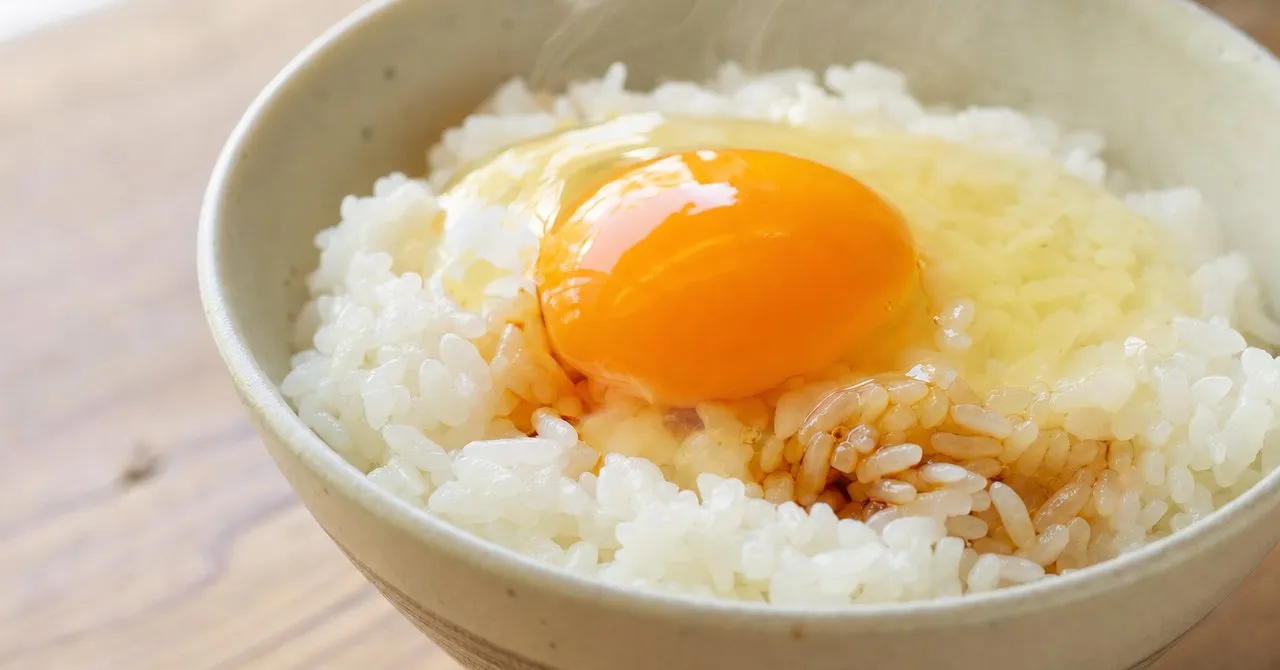
Tamago kake gohan, or TKG, is about as simple as a Japanese meal gets: hot rice, a raw egg, a little soy sauce. Japan’s Food Safety Commission describes eating raw eggs as a way of eating peculiar to Japan, and English-language recipes for TKG often raise the obvious question: are Japanese eggs somehow different?
The short answer is that the eggs aren’t magic. The system around them is. In Japan, the best-before date on a carton of raw-use eggs is defined as the period the egg can be eaten raw. Sanitizing rules at packing centers and refrigeration guidance stand behind that date, and Japan’s Food Safety Commission still says a small number of eggs carry Salmonella.
US agencies take a different line. The USDA advises everyone against eating raw or undercooked eggs. Both the USDA and the FDA say that if you want to eat an egg raw, use one that has been pasteurized in the shell. That is the version of TKG this article gives.
The short answer
- In Japan, eggs sold for raw use carry a best-before date (賞味期限) that marks the raw-eating window. After that date, or if the shell is cracked, official guidance says to cook the egg thoroughly.
- Industry date-labeling guidance sets that date at no more than 21 days from the day the egg was laid. (Whether that limit is binding isn’t stated in the sources we reviewed.)
- Japanese eggs are washed and sanitized, then candled and sorted, at packing facilities known as GP centers. They are not described as sterile, and Japan’s guidance doesn’t call for heat-pasteurizing them in the shell.
- In the US, the USDA and FDA say raw eggs carry a Salmonella risk. They advise using pasteurized in-shell eggs for any dish where the egg isn’t cooked. A US carton date doesn’t mean what a Japanese one does.
What the date on a Japanese egg carton means
Japan’s Food Safety Commission puts it in one line in its guide for children:
卵の賞味期限は生で食べられる期限を示したもの。 — The best-before date on an egg shows the period during which it can be eaten raw. — Food Safety Commission of Japan
The egg industry’s fair-competition code says the same in its enforcement rules, which define the best-before date as the period during which the egg can be eaten raw. Prefectural health departments agree. Gifu Prefecture describes the date as the period an egg can be eaten raw with confidence. It also notes that eggs sold for heat-processing use may carry a laying date or packing date instead of a best-before date.
The 21-day cap
The Egg Fair Trade Council’s labeling guide restates the limit from the industry’s date-labeling manual:
賞味期限:産卵日を起点とし21日以内を限度として表示する — Best-before date: to be labeled with a maximum of 21 days, counting from the laying date. — Egg Fair Trade Council (鶏卵公正取引協議会)
The same guide reprints a table of the theoretical raw-eating period by storage temperature, taken from an industry date-labeling manual. Warmer eggs get fewer days:
| Storage temperature | Theoretical raw-eating period |
|---|---|
| 50°F (10°C) | 57 days |
| 68°F (20°C) | 30 days |
| 75°F (24°C) | 22 days |
| 82°F (28°C) | 16 days |
| 97°F (36°C) | 8 days |
(Selected rows. The full table runs from 10°C to 36°C in 2°C steps.)
The 21-day cap is far shorter than the 57 days listed for 50°F (10°C). The guide has a heading for the basis of the date but no explanation under it, so we won’t guess how 21 days was chosen. What the table does show is that temperature matters a great deal.
The label also tells you what to do afterward
Japanese egg cartons carry usage instructions, and the Egg Fair Trade Council’s guide gives model wording. Its gist: use the egg within the date if you plan to eat it raw. Once the date has passed, or if the shell is cracked, cook it thoroughly and soon. The guide notes that Japan’s national food labeling standard, the fair-trade rules and the egg trading guidelines all cover this usage instruction.
Two more details from prefectural guidance:
- Refrigerate at 50°F (10°C) or below after buying. Tochigi Prefecture’s model label for raw-use eggs says so, and Gifu adds that an egg not kept that cold shouldn’t be eaten raw, even within its date.
- “Cook thoroughly” has a number. Gifu gives a guideline of the equivalent of 1 minute at a center temperature of 158°F (70°C). That matches the national standard for foods made with eggs (158°F / 70°C for at least 1 minute, or equivalent), and Tochigi’s model label for heat-processing eggs uses it.
What happens before the egg reaches the carton
In Japan, eggs are graded and packed at facilities known as GP centers (grading and packing centers). The Food Safety Commission describes the sequence: eggs are washed and sanitized, dried, candled, sorted and packed, then shipped directly to supermarkets and stores.
A HACCP guide for these facilities, issued with confirmation from Japan’s Ministry of Health, Labour and Welfare (MHLW), spells out the details:
| Step | What the guide says |
|---|---|
| Wash water | At least 86°F (30°C), and at least 9°F (5°C) warmer than the eggs |
| Sanitizer | Wash and rinse water with sodium hypochlorite at 150 ppm or more, or a sanitizer at least as effective |
| Drying | Promptly after washing |
| Candling | Transmitted light or another method that reliably separates sound eggs from cracked ones |
| Cracked or defective eggs | Lightly cracked and soft eggs go to liquid egg or heat-processing use; badly cracked or defective eggs aren’t shipped as food |
| Storage | Product storage room at 77°F (25°C) or below; temperature control kept consistent, as far as possible, from shipping to consumption |
MHLW’s summary of egg regulations ties it together. It includes a heating requirement for eggs used in making food (158°F / 70°C for at least 1 minute, or equivalent), with an exception for when sound eggs sold for raw use, still within their best-before date, are cooked or eaten promptly after cracking.
A feature in aff, the web magazine of Japan’s agriculture ministry (MAFF), sums up the logic:
国産たまごを生で食べられるのは、日本の衛生管理技術と物流の冷蔵技術が発達しているからこそ。 — Domestic eggs can be eaten raw precisely because Japan’s hygiene-management and cold-chain logistics technologies are so well developed. — MAFF, aff magazine
“Sterile” is the wrong word
Some English-language TKG pages overstate this. One says Japan’s processing “obliterates even the slightest traces of bacteria that can cause salmonella poisoning.” Japan’s Food Safety Commission is more careful. It says eggs containing Salmonella are very rare in Japan, about 3 in 100,000. Rare is not zero. The same guide also tells readers to refrigerate eggs, check for cracks, crack them just before eating and not leave them sitting out.
Another English-language page says Japan’s guidelines require in-shell heat sterilization for any egg meant to be eaten raw. The Japanese guidance we reviewed describes something else: washing with a chlorine-based sanitizer, drying, candling, date labeling and temperature control. We found no general requirement to heat-pasteurize shell eggs.
To be fair, both pages tell readers outside Japan to take care, and both mention pasteurized eggs, which matches US guidance. One leads with buying free-range eggs from local farms instead, which US agencies don’t offer as an alternative (see below).
What US agencies say
USDA’s Food Safety and Inspection Service (FSIS) states:
- “Everyone is advised against eating raw or undercooked egg yolks and whites or products containing raw or undercooked eggs.” Infants, young children, older adults, pregnant women and people with weakened immune systems are especially vulnerable.
- Salmonella Enteritidis “can contaminate eggs during their development inside the hen’s reproductive tract”, so a clean, uncracked shell is no guarantee.
- “In-shell eggs that have been pasteurized may be used safely without cooking.”
- Store eggs at 40°F (4°C) or below, and don’t leave refrigerated eggs out for more than 2 hours.
- Carton dates are optional on USDA-graded eggs. If one is used, an expiration (“Sell by”/“EXP”) date “can be no more than 30 days from the packing date,” and a “Use by” or “Best if Used Before” date may not exceed 45 days including the packing date.
The FDA says the same about recipes that call for raw eggs. It advises using “shell eggs that have been treated to destroy Salmonella,” or pasteurized egg products. Its required safe-handling label on egg cartons reads in part: “keep eggs refrigerated, cook eggs until yolks are firm.”
So the short version for a US kitchen is this: US agencies advise against eating ordinary shell eggs raw, and they name pasteurized in-shell eggs as the alternative. Neither page makes an exception for farm or free-range eggs.
The two dates are not comparable
| Japan (raw-use eggs) | US | |
|---|---|---|
| What the date means | Period the egg can be eaten raw | Not a raw-eating window; agencies advise cooking |
| Counted from | Laying date | Packing date |
| Maximum | 21 days | 30 days (expiration/sell-by) or 45 days (use-by/best-before), if dated at all |
| Home storage | 50°F (10°C) or below | 40°F (4°C) or below |
| Guidance on keeping / after the date | After the date, cook thoroughly (Gifu: equivalent of 1 minute at a center temperature of 158°F / 70°C) | No raw-eating window. FSIS’s storage chart gives 3–5 weeks in the refrigerator for raw shell eggs |
| Official stance on raw eggs | Raw use is allowed within the date, under the conditions above | Advised against for everyone, unless pasteurized |
A US egg that’s 10 days from its date has not passed through Japan’s system, and the Japanese 21-day limit says nothing about it. Don’t use one country’s date to judge the other’s eggs.
How tamago kake gohan is eaten in Japan
Japan takes TKG seriously enough that MAFF ran a feature on it in the April 2024 issue of its web magazine aff, supervised by Ueno (上野貴史), head of the Japan Tamago Kake Gohan Research Institute (日本たまごかけごはん研究所). The feature lays out a basic “golden ratio,” three styles, and mentions 16 styles in all.
The three styles it describes:
- Sunrise (サンライズ): beat the egg, make soy-sauce rice, pour the egg over and mix. The basic version.
- Typhoon (タイフーン): separate the egg, mix the white into the rice, set the yolk in a hollow in the center, pour soy sauce over, and mix a little at a time as you eat.
- Full Moon (フルムーン): whip the white into a stiff meringue, set it on the rice with the yolk in the center, add soy sauce, and break it up as you eat.
The soy sauce the institute calls for is worth noticing. It’s usukuchi (淡口), the lighter-colored style, not the everyday dark koikuchi. The feature adds that a slightly sweet one tastes better and also suggests a shijimi-clam dashi soy sauce. For what usukuchi is (lighter in color, not in salt), see Japanese soy sauce types. The feature doesn’t name a region. For one well-known sweet style, see Kyushu’s sweet soy sauce.
A day and a story
According to HugKum, October 30 marks the first Japan Tamago Kake Gohan Symposium, held on that date in 2005 in Unnan, Shimane Prefecture. The Japan Anniversary Association recognized the day.
The dish’s origin story is looser. The Okayama Prefecture Tourism Federation says Kishida Ginkō, a pioneer of Japanese newspapers and the central figure in Misaki town’s TKG story, is said to have loved TKG and spread it across the country. The federation hedges with “it is said” (と伝えられています), and we found no primary record pinning down when he first ate it, so treat it as a local tradition.
Recipe: Tamago Kake Gohan (Sunrise style) — serves 1
Adapted from the basic TKG published in MAFF’s aff magazine (April 2024), supervised by the Japan Tamago Kake Gohan Research Institute. Not kitchen-tested by this site.
US safety note: The USDA and FDA advise against eating raw eggs that haven’t been pasteurized. Use a pasteurized in-shell egg, labeled as such on the carton. These agencies also identify young children, older adults, pregnant women and people with weakened immune systems as being at higher risk.
Ingredients
- 150 g (about 5¼ oz) hot cooked Japanese short-grain rice, cooked slightly firm
- 7 g (about 6 mL, a little over 1 tsp) usukuchi soy sauce
- 1 large pasteurized in-shell egg (the source calls for Japan’s M size, 58–64 g, which is about a US large)
Rice: The 150 g is cooked rice. One gō (180 mL, about ¾ US cup) of uncooked rice weighs about 150 g and, according to Panasonic, cooks to about 330 g, a little more than two servings. See How to Cook Japanese Rice for the method, and Japanese Recipes in an American Kitchen for why a rice-cooker cup isn’t a US cup.
Method
- Make the beaten egg. Crack the egg just before eating (Japan’s Food Safety Commission’s advice). Pinch the yolk with chopsticks to break it, then mix with a cutting motion to break up the white.
- Make soy-sauce rice. Put the hot rice in a bowl, pour the soy sauce evenly over it and mix quickly. The aff feature says hot rice brings out the soy sauce’s aroma.
- Add the egg. Pour the beaten egg over the rice in a circle and mix everything together. HugKum’s version adds: eat it right away.
If you can’t get pasteurized eggs, US guidance offers no raw option. Cook the egg until the yolk and white are firm, or use it in a cooked dish.
FAQ
Can you eat raw eggs in Japan? Japanese official guidance treats eggs sold for raw use as fit to eat raw within their best-before date. The conditions: the egg has been kept at 50°F (10°C) or below and the shell isn’t cracked. Japan’s Food Safety Commission still says about 3 in 100,000 eggs contain Salmonella, so the risk is low, not zero. Eggs labeled for heat-processing use (加熱加工用) are meant to be cooked.
Can I eat American eggs raw the way people do in Japan? US agencies say no, unless the egg is pasteurized. USDA FSIS advises everyone against eating raw or undercooked eggs, and both FSIS and the FDA point to pasteurized in-shell eggs for dishes where the egg stays raw.
Are Japanese eggs pasteurized? Not as a rule, according to the Japanese guidance we reviewed. At packing centers they are washed with water at 86°F (30°C) or warmer containing a chlorine-based sanitizer, then dried and candled. Raw-use eggs are then sold with a dated raw-eating window and storage instructions.
What should I do with a Japanese egg past its date? Japanese guidance says to cook it thoroughly and soon. Gifu Prefecture gives the equivalent of 1 minute at 158°F (70°C) at the center as a guideline.
When is Tamago Kake Gohan Day? October 30. It marks the first Japan Tamago Kake Gohan Symposium, held in Unnan, Shimane Prefecture, in 2005.
How this article was researched
The Japanese side of this article comes from Japanese-language official and industry sources: Japan’s Food Safety Commission, the MHLW-confirmed HACCP guide for egg packing centers, the egg industry’s fair-competition code and the Egg Fair Trade Council’s labeling guide, prefectural health departments, and MAFF’s aff magazine. US guidance comes from USDA FSIS and the FDA. Quotations from Japanese sources are kept short and translated by us. The recipe is adapted from the method MAFF published with the Japan Tamago Kake Gohan Research Institute and has not been kitchen-tested by this site. Where a point could not be confirmed, such as how the 21-day limit was calculated or the early history of the dish, we say so. Nothing here is medical advice.
Sources
Japanese official and industry sources:
- 食品安全委員会 キッズボックス「卵を安全に食べるために」 — Food Safety Commission of Japan: eating eggs safely (PDF)
- 食品安全委員会 リスクプロファイル「鶏卵中のサルモネラ・エンテリティディス」 — Food Safety Commission: risk profile, Salmonella Enteritidis in eggs (PDF)
- HACCP手引書作成委員会(厚生労働省確認)HACCP導入の手引書 鶏卵選別包装施設・液卵製造施設 — MHLW-confirmed HACCP guide for egg grading and packing facilities (PDF)
- 厚生労働省「卵に関する規制について」 — MHLW: regulations on eggs (PDF)
- 鶏卵公正取引協議会「鶏卵の表示で留意するポイント」 — Egg Fair Trade Council: key points for egg labeling (PDF)
- 鶏卵の表示に関する公正競争規約及び施行規則 — Fair-competition code and enforcement rules for egg labeling (PDF)
- 農林水産省 鶏卵の規格 — MAFF: egg size grades
- 岐阜県 ぎふ食卓の安全・安心メールマガジン 第126号 — Gifu Prefecture food-safety newsletter on egg dates (PDF)
- 栃木県「鶏卵の食品表示について」 — Tochigi Prefecture: egg labeling (PDF)
- 農林水産省 aff 2024年4月号「たまごとお米で最強コンビ 至極のTKG!」 — MAFF aff magazine: the TKG feature / PDF
- 岡山観光WEB 岸田吟香記念館 — Okayama Prefecture Tourism Federation: Kishida Ginkō Memorial Museum
- パナソニック UP LIFE「米1合は何グラム?」 — Panasonic: weight and cooked yield of 1 gō of rice
- HugKum(小学館)「卵かけご飯」は手順とアレンジでこんなに変わる! — HugKum: TKG styles and TKG Day
US official sources:
- USDA FSIS — Shell Eggs from Farm to Table
- FDA — What You Need to Know About Egg Safety
- USDA AMS — United States Standards, Grades, and Weight Classes for Shell Eggs (PDF)
English-language examples:
Part of our look at what English-language Japanese recipes get wrong. See also: How to Cook Japanese Rice and Japanese soy sauce types.