The Vinegar in Japanese Kewpie Mayo Isn't Rice Vinegar
Japanese Kewpie uses egg yolk, a vinegar Kewpie brews from apple juice, malt and other ingredients, and no sugar. The US-made Kewpie is a different recipe.
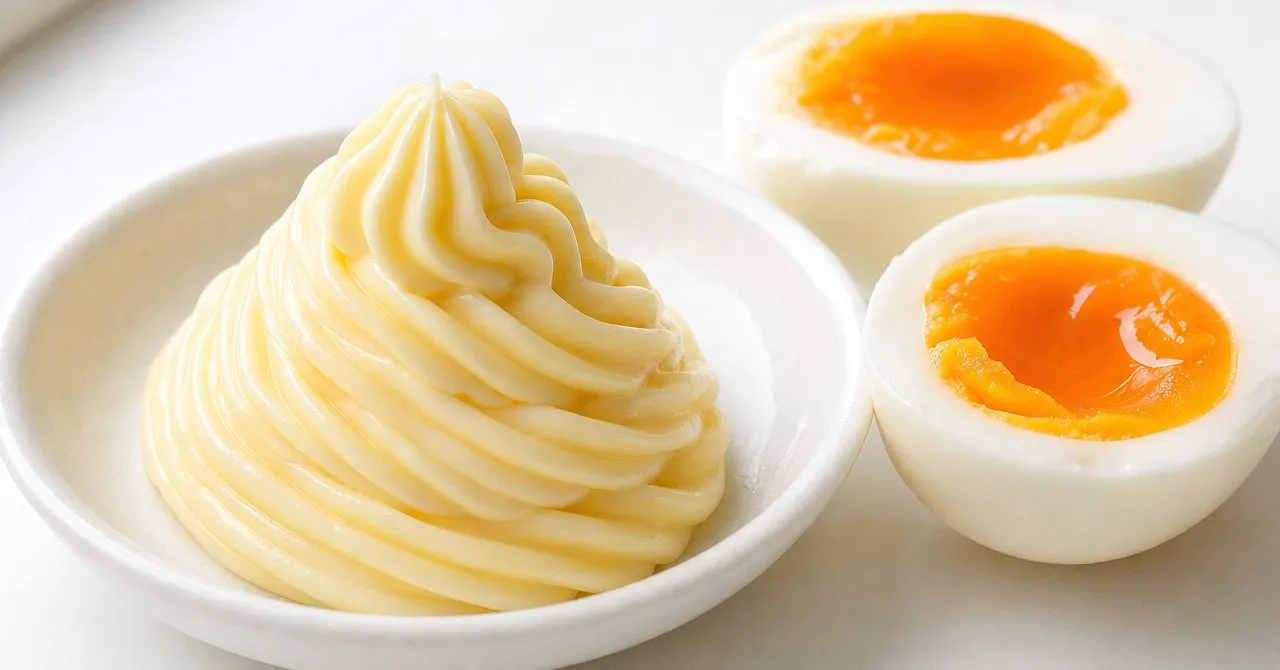
Several English-language pages about Kewpie give the same explanation for its flavor: egg yolks plus rice vinegar, often with apple cider vinegar alongside. Some copycat recipes follow that lead. Tasting Table’s version, for example, calls for rice vinegar, sugar, and MSG.
Kewpie’s own Japanese pages tell a different story. The company says it set up a separate brewing company in 1962 to make a vinegar just for its mayonnaise, brewed from apple juice, malt, and other ingredients. In Kewpie’s account, Japan’s vinegar was then mostly rice-based and Japanese-style, and a vinegar suited to a Western condiment like mayonnaise was hard to find. The Japanese label lists no sugar at all.
There’s a twist, though. Kewpie USA also makes and sells a US version, labeled “Product of USA,” and its ingredient list really does include rice vinegar, sugar, and MSG. So the English-language pages aren’t entirely wrong. They’re describing two different products as if they were one.
The short answer
- Japanese Kewpie (the 450 g bottle made by Kewpie Corporation in Japan) lists vegetable oil, egg yolk, brewed vinegar, salt, spices, an amino-acid seasoning, and spice extract. The vinegar is Kewpie’s own “mayonnaise vinegar,” made from apple juice, malt, and other ingredients. No sugar and no rice vinegar appear on the label, and egg white isn’t listed as an ingredient. (Kewpie’s product page still warns that the product contains egg white as an allergen.)
- US-made Kewpie (the 12 fl oz bottle Kewpie USA lists as “Product of USA”) lists soybean oil, egg yolks, water, four vinegars (distilled, rice, white balsamic, and cider), salt, MSG, sugar, mustard flour, calcium disodium EDTA, and natural flavors.
- Both use egg yolks rather than whole eggs. That’s Kewpie’s choice, not a rule. Neither Japan’s nor the US’s standard for mayonnaise requires yolks only.
What’s on the Japanese label
Here is the ingredient list from Kewpie’s official Japanese product page for the 450 g (about 15.9 oz) bottle, with a gloss for each item.
| Japanese label | What it means |
|---|---|
| 食用植物油脂(国内製造) | Edible vegetable oil (processed in Japan). Kewpie says it blends rapeseed (canola) oil, soybean oil, and others. |
| 卵黄 | Egg yolk |
| 醸造酢 | Brewed vinegar |
| 食塩 | Salt |
| 香辛料 | Spices (not itemized) |
| /調味料(アミノ酸) | After the slash, the additives. This one is “seasoning (amino acids).” |
| 香辛料抽出物 | Spice extract |
| (一部に卵・大豆・りんごを含む) | Contains egg, soy, and apple |
Two things stand out. The allergen line includes apple, which fits the vinegar Kewpie describes. There’s no sugar, and egg white isn’t listed as an ingredient. Kewpie’s product page does add an allergen note that the product contains egg white (本品はアレルゲンとして卵白を含みます), so people with egg allergies should treat it like any egg product. The same note says the eggs are pasteurized but should be considered as allergenic as raw egg.
Kewpie’s nutrition panel uses a serving of about one tablespoon (15 g): 100 kcal, 11.2 g fat, 0.4 g protein, 0.1 g carbohydrate, and 0.3 g salt equivalent. A diagram on the company’s ingredients page gives the rough proportions as 70% vegetable oil and 30% egg, vinegar, seasonings, and spices.
The vinegar: why Kewpie brewed its own
This is the detail the rice-vinegar explanation misses. Kewpie explains it directly on its ingredients page:
かつて、日本で製造されている酢は米などを原料にした和風の酢が主体で、洋風調味料であるマヨネーズが合う酢の入手は困難でした。 — In the past, the vinegar made in Japan was mainly Japanese-style vinegar made from rice and the like, and a vinegar suited to mayonnaise, a Western-style condiment, was hard to obtain. — Kewpie, “The ingredients of mayonnaise”
The company’s answer, by its own account, was to found a dedicated vinegar company in 1962, today called Kewpie Jyozo (キユーピー醸造, “Kewpie Brewing”). Kewpie’s English corporate history says the company, first named Nishifu Industries, was set up “to manufacture vinegar used exclusively for KEWPIE Mayonnaise.” After trial and error, it says, the company produced a “mayonnaise vinegar” (マヨネーズ専用酢) brewed with its own methods from apple juice, malt, and other ingredients (リンゴ果汁やモルトなど).
So the vinegar wasn’t a variation on Japanese rice vinegar. Kewpie made it because, in its account, Japan’s vinegar was then mostly rice-based and Japanese-style, and a vinegar suited to a Western condiment was hard to find. Two cautions:
- The wording ends in nado (“and so on”), so apple juice and malt are the named ingredients, not necessarily the only ones.
- The label itself says only 醸造酢, “brewed vinegar,” without listing the raw materials. The apple appears in the allergen line.
Kewpie also points out that the vinegar and salt do a second job. The company says they hold back bacterial growth in the jar, which it calls a preservative effect.
If you want to understand how Japanese rice vinegar behaves in other recipes, see Rice Vinegar Is Not a Mirin Substitute.
Yolks only, about 3.6 per bottle
Kewpie’s ingredients page puts a number on the yolks:
キユーピー マヨネーズは卵黄を使っていて、「450gのマヨネーズには卵黄が3.6個」入っています。 — Kewpie Mayonnaise uses egg yolks: “a 450 g bottle of mayonnaise contains 3.6 yolks.” — Kewpie, “The ingredients of mayonnaise”
That works out to roughly one yolk per 125 g (about 4.4 oz) of mayonnaise, or a little over a tenth of a yolk per tablespoon. (That’s our arithmetic from Kewpie’s figure.)
The Japanese pages we read describe the product as using yolk and call it a “yolk type” (卵黄タイプ) mayonnaise. None of them includes a line that literally says “no whites.” The ingredient list names yolk and not white, though the product page’s allergen note says the product contains egg white. Kewpie’s US site states it outright: “we only use egg yolks, and not egg whites.”
Kewpie has been making it this way for a long time. Its 2020 integrated report says founder Toichiro Nakashima spent about three years in Britain and the US in the 1910s, where he came across orange marmalade and mayonnaise. In 1925, the report says, the company launched Kewpie Mayonnaise as a nutritious, yolk-type product. A 2025 Kewpie press release calls that the first mayonnaise made and sold in Japan.
Kewpie still studies what the yolk does. In that 2025 release, its researchers reported that low-molecular-weight peptides may contribute to the richness (koku) of yolk-type mayonnaise. They used test batches, one with about 2.3 times the yolk of the other, and the company framed the result as a possibility, not a conclusion.
Yolks-only isn’t universal even within Kewpie. In early 2026, food-trade press (Impress Watch and Nihon Shokuryo Shimbun) reported that Kewpie Half, the company’s reduced-calorie spread first sold at retail in 1991, was switching from whole egg to the same yolk type as the flagship. We didn’t find a Kewpie release on the change. So Japan has had whole-egg mayonnaise-style products too, including one of Kewpie’s own.
MSG and sugar
MSG. The Japanese label lists 調味料(アミノ酸), “seasoning (amino acids).” That’s a group name, and the label doesn’t say which amino-acid compound is used. The US label is more specific and lists monosodium glutamate. Kewpie USA’s FAQ confirms that the US-made 12 oz product contains MSG.
Sugar. The Japanese label lists none. Kewpie’s ingredients page adds only that the mayonnaise is low in carbohydrate compared with other condiments. The US-made version lists sugar.
The Kewpie sold in the US is a different recipe
Kewpie USA’s product page lists the 12 fl oz mayonnaise as “Product of USA” and calls it a “New Mainstream Version Made in California.” Here are the two ingredient lists side by side, as each official page gives them:
| Japan (450 g, Kewpie Corporation) | US (12 fl oz / about 355 mL, Kewpie USA) | |
|---|---|---|
| Oil | Vegetable oil (rapeseed, soybean, and others, per Kewpie) | Soybean oil |
| Egg | Yolk | Egg yolks |
| Water | Not listed (Japanese labels customarily omit added water) | Listed |
| Vinegar | “Brewed vinegar” (Kewpie’s apple-and-malt mayonnaise vinegar) | Distilled, rice, white balsamic, and cider vinegars |
| Sugar | Not listed | Listed |
| Amino-acid seasoning / MSG | 調味料(アミノ酸) (amino-acid seasoning) | Monosodium glutamate |
| Spices | Spices, spice extract | Mustard flour, natural flavors |
| Other | — | Calcium disodium EDTA (“to protect flavor”) |
Kewpie USA also sells a cage-free version, which its page describes as a West Coast Costco exclusive. On that page the company calls it “Kewpie’s original Mayonnaise recipe” and says it uses “a unique blend of vinegars, just like the version made in Japan.” That page has no ingredient list. The 12 fl oz label and the Japanese label still name different vinegars.
Older English-language articles may describe a different US formula. A 2024 Chowhound article said the American version left out MSG and used yeast extract instead. Insanely Good Recipes says the same. Kewpie USA’s product page, as of October 2026, lists MSG and no yeast extract. We couldn’t find when or whether the formula changed. What a given bottle contains is printed on that bottle.
Neither version is the “fake” one. The US product is a legitimate American-made mayonnaise. It simply isn’t the same recipe as the one sold in Japan.
What makes mayonnaise “mayonnaise” in Japan and the US
Both countries define mayonnaise in official standards, and the two definitions are closer than you might expect.
| Japan: JAS 0955 (Dressings), MAFF | US: 21 CFR 169.140, FDA | |
|---|---|---|
| Minimum vegetable oil | 65% by weight | 65% by weight |
| Egg | Yolk or whole egg | Yolk or whole egg (liquid, frozen, or dried) |
| Acid | Vinegar or citrus juice | Vinegar, lemon juice, and/or lime juice |
| Sweeteners | Sugars and honey allowed | Nutritive carbohydrate sweeteners allowed |
| Glutamate | 調味料(アミノ酸等) (amino-acid seasonings) allowed | MSG allowed |
| EDTA | Not on the permitted list | Calcium disodium EDTA allowed as a sequestrant |
| Other limits | Water 30% or less; nothing outside the listed ingredients | Spices allowed except saffron and turmeric |
Japan’s standard defines mayonnaise as a semi-solid dressing that uses yolk or whole egg, contains only a short list of permitted ingredients, and is at least 65% vegetable oil by weight. Lower-oil spoonable dressings fall into other categories in the same standard. One example is “salad creamy dressing,” which uses egg yolk with starch or a thickener and runs from 10% to under 50% oil.
What this means:
- Yolks only is a Kewpie decision. Both standards accept whole eggs.
- MSG and sugar are allowed in both countries. Japanese Kewpie uses an amino-acid seasoning and skips sugar. US Kewpie uses both MSG and sugar.
- The difference that shows up on these two labels is EDTA, which the US standard permits and Japan’s mayonnaise definition doesn’t list. The standards differ in smaller ways too: the US allows citric and malic acid, and Japan allows protein hydrolysate and honey.
- The two standards may not carry the same legal weight. The US rule is a federal standard of identity. Japan’s definition comes from a JAS standard, and we haven’t confirmed whether Japanese labeling law limits the name “mayonnaise” to products that meet it.
Why copycat recipes use rice vinegar, sugar, and MSG
Several English-language pages say Japanese Kewpie gets its tang from rice vinegar. Japanese Taste says Kewpie uses “two kinds of vinegars… rice vinegar and apple cider vinegar.” Insanely Good Recipes describes “a blend of vinegar types, including rice, apple cider, and more.” A 2024 Tasting Table piece says the “secret ingredient” for homemade Kewpie is rice vinegar, and its copycat combines rice vinegar with sugar, salt, MSG, yolks, and oil. (It notes that some copycats favor apple cider vinegar instead, and Insanely Good’s substitute pairs cider vinegar with MSG.)
There’s a reasonable explanation for this. If the model is the Kewpie on an American grocery shelf, that label does list rice vinegar, cider vinegar, sugar, and MSG. A copycat built from the US label is copying the US product fairly faithfully.
The mismatch only arises when that recipe is presented as Japanese Kewpie. The Japanese label lists no sugar, and Kewpie describes its vinegar as made from apple juice, malt, and other ingredients. It says it made that vinegar because Japan’s vinegar was then mostly rice-based and a vinegar suited to mayonnaise was hard to find.
We haven’t found a published homemade-mayonnaise method from Kewpie itself, so we don’t give a recipe here. If you’re adapting a copycat toward the Japanese bottle, the label suggests three directions: drop the sugar, use egg yolks only, and choose a vinegar that isn’t rice-based. That’s a reading of the label, not a tested formula. If you make any mayonnaise at home, read the raw-egg note in the FAQ below.
FAQ
What vinegar is in Kewpie mayo? In the Japanese version, Kewpie uses its own “mayonnaise vinegar,” which the company says it brews from apple juice, malt, and other ingredients. The label calls it simply “brewed vinegar.” The US-made version lists distilled, rice, white balsamic, and cider vinegars.
Does Kewpie mayo have MSG? The US label lists monosodium glutamate, and Kewpie USA’s FAQ confirms it. The Japanese label lists 調味料(アミノ酸), an “amino-acid seasoning,” a group name that doesn’t specify the compound. Some older English articles say the US version has no MSG, so check the bottle you have.
Does Kewpie mayo have sugar? The Japanese label lists none. The US-made label lists sugar.
What’s the difference between Japanese and American mayonnaise? Both countries’ standards require at least 65% vegetable oil and allow yolk or whole egg. One well-known difference is Kewpie’s yolks-only formula, a company choice that its US product shares. Beyond that, compare labels. Japanese Kewpie lists no sugar, and US Kewpie does.
How do I tell which Kewpie I’m buying? Check the country of origin and the first ingredient, not just the language on the label. Kewpie USA’s version is listed as “Product of USA,” and its ingredients start with soybean oil. A Japan-made bottle has a Japanese ingredient list beginning with 食用植物油脂 and names キユーピー株式会社 (Kewpie Corporation) as the maker.
Is homemade mayonnaise with raw yolks safe? US food-safety agencies advise caution. USDA’s Food Safety and Inspection Service advises against eating raw or undercooked eggs, and it names homemade mayonnaise made from egg ingredients that aren’t thoroughly cooked among the foods this covers. FSIS says to use pasteurized eggs or egg products for recipes that call for raw eggs, and that in-shell eggs that have been pasteurized may be used safely without cooking. FDA advises using shell eggs treated to destroy Salmonella, or pasteurized egg products, in dishes that call for raw egg. Children, older adults, and pregnant people are among the groups FDA lists as at higher risk. For more on raw eggs and Japanese cooking, see Raw Eggs and Tamago Kake Gohan.
How this article was researched
The ingredient lists, the 3.6-yolk figure, the vinegar history, and the 1925 launch date come from Kewpie Corporation’s official Japanese product pages, ingredients page, integrated report, press release, and English corporate history. The Kewpie Half change comes from Japanese food-trade press. The definitions of mayonnaise come from Japan’s agriculture ministry (JAS 0955, Dressings) and the US Code of Federal Regulations (21 CFR 169.140). Details of the US product come from Kewpie USA’s official pages as published in October 2026. Raw-egg guidance comes from USDA FSIS and FDA. Japanese quotations are kept short and translated by us. The English-language claims we discuss come from the pages linked below. This article contains no recipe, and nothing here was kitchen-tested by this site.
Sources
Japanese primary sources:
- キユーピー — キユーピー マヨネーズ 450g(商品情報)— Kewpie: product page and ingredient list
- キユーピー — マヨネーズの原料 — Kewpie: the ingredients of mayonnaise (yolks, vinegar, oil)
- キユーピーグループ統合報告書2020 p.4–5 — Kewpie Integrated Report 2020 (company history)
- キユーピー ニュースリリース(2025年2月28日)卵黄型マヨネーズのコクに低分子ペプチドが寄与する可能性を確認 — Kewpie press release on yolk-type mayonnaise research
- 農林水産省 — 日本農林規格 JAS 0955 ドレッシング — MAFF: Japanese Agricultural Standard for dressings
- 消費者庁 — 新たな原料原産地表示制度 Q&A(原原-5)— Consumer Affairs Agency: water is customarily not listed
- Kewpie — History (English corporate site)
Japanese news:
- Impress Watch — キユーピーハーフが大幅刷新 卵黄タイプのマヨネーズに — Kewpie Half switches from whole egg to yolk type
- 日本食糧新聞 — キユーピー <ハーフ>(キユーピー)2026年2月19日発売 — Nihon Shokuryo Shimbun: Kewpie Half reformulation
US official sources:
- Kewpie USA — official online store, KEWPIE Mayonnaise 12 fl oz (Product of USA)
- Kewpie USA — official online store, Kewpie Cage-Free Mayonnaise
- eCFR — 21 CFR 169.140 Mayonnaise
- USDA FSIS — Shell Eggs from Farm to Table
- FDA — What You Need to Know About Egg Safety
English-language pages discussed:
- Japanese Taste — Kewpie Mayo: Japan’s Favorite Mayonnaise
- Insanely Good Recipes — What Is Kewpie Mayo?
- Chowhound — How American Kewpie Mayo Differs From The Original
- Tasting Table — The Specific Vinegar You Need For Delicious Homemade Kewpie Mayo
See also: Hibachi Fried Rice and Yum Yum Sauce, where a restaurateur says he modeled his sauce on Kewpie, and Onigiri Isn’t Made with Sushi Rice, including the tuna-mayo filling.