"Hibachi" Isn't a Griddle — Hibachi Fried Rice and Yum Yum Sauce Explained
In Japanese, a hibachi is a charcoal brazier. What the American hibachi griddle really is, what's known about yum yum sauce's origins, and a garlic rice recipe.
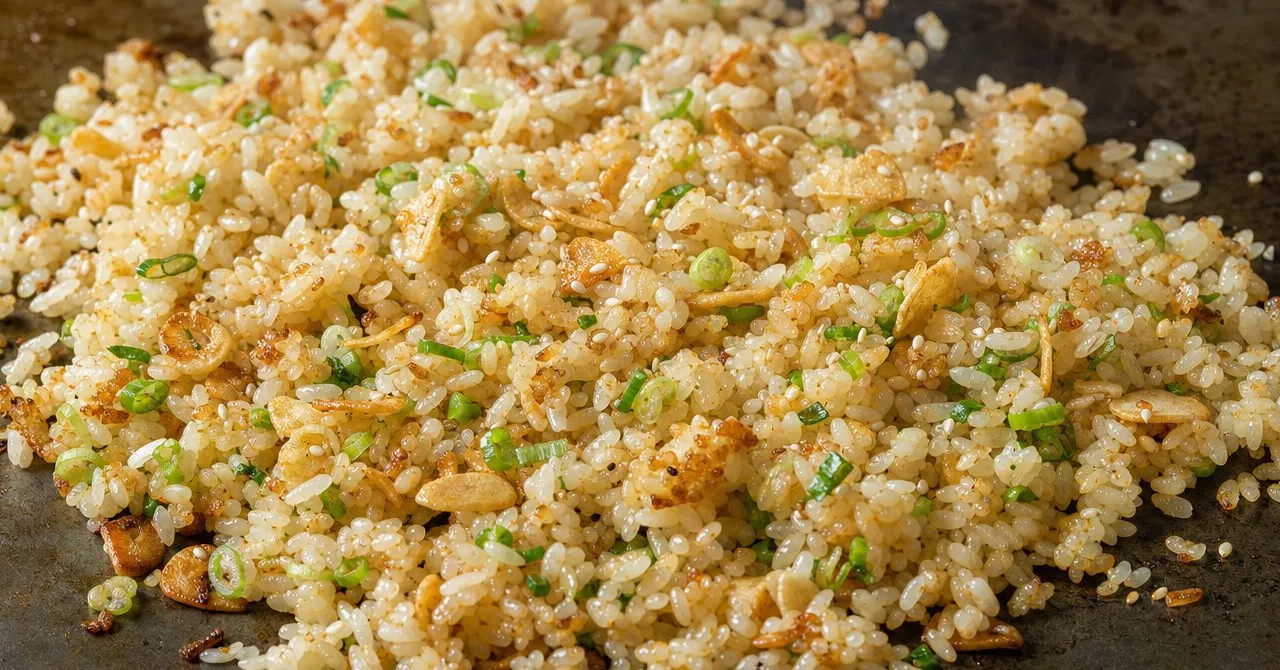
Across the United States, “hibachi” means a night out: a chef at a big steel griddle, fried rice cooked in garlic butter right in front of you, and a pink-orange sauce that regulars call yum yum sauce or white sauce. Search for hibachi fried rice and many of the recipes you find call it “Japanese.”
The short answer: in Japanese, a hibachi (火鉢) is not a griddle at all. It is a charcoal brazier, a container of ash and burning charcoal once used to heat rooms and boil water. The flat-griddle cooking is teppanyaki (鉄板焼き), which a Kobe restaurant, Misono, says it has served since its founding in 1945. The griddle-show restaurant is an American format, made famous by Benihana in New York in 1964. And yum yum sauce has a documented history only in the American South.
None of that makes the food less good. American hibachi is a real restaurant tradition with its own history, much of it written by Japanese- and Taiwanese-born restaurateurs. It is just not what the word hibachi means in Japan.
The short answer
| Term | What it means in Japan | What it usually means in the US |
|---|---|---|
| Hibachi (火鉢) | A charcoal brazier for warming hands and rooms and boiling water | A griddle restaurant, or a small charcoal grill |
| Teppanyaki (鉄板焼き) | Meat and vegetables cooked on a hot iron plate | What American “hibachi” restaurants actually do |
| Chāhan (炒飯) | Fried rice, a Chinese-origin dish, also called yakimeshi | “Hibachi fried rice” is one American version of it |
| Yum yum sauce | No Japanese origin documented | A mayonnaise-and-tomato sauce from US steakhouses |
What a hibachi is in Japanese
The dictionaries collected on Kotobank give the same picture. Shogakukan’s Digital Daijisen defines it this way:
灰を入れ、中に炭火をおこして、暖房や湯沸かしなどに用いる道具。 — A device filled with ash, in which a charcoal fire is kindled, used for heating, boiling water, and the like. — デジタル大辞泉 (via Kotobank)
Other dictionaries collected on the same page, including the Nihon Kokugo Daijiten, the Sekai Daihyakka Jiten, and the Britannica Japan concise encyclopedia, describe the same thing: an ash-filled container of live charcoal for warming the hands, heating the room, and heating water for tea. None of them mentions a cooking plate. The Sekai Daihyakka Jiten does note that some long nagahibachi were designed so simple cooking and meals could be done on them, but as a charcoal heater, not as a griddle.
The history points the same way. According to those encyclopedia entries, charcoal became widespread in the Edo period, which made the hibachi a common city heater, and the long nagahibachi sat in urban living rooms from the late Edo period until about the late 1930s and early 1940s. Today, with oil, gas, and electric heat, hibachi survive mostly as decoration.
Merriam-Webster agrees: “a charcoal brazier,” with a first known use in 1863. Its children’s definition, “a charcoal grill,” matches the other American meaning, a small charcoal grill. Neither is a flat steel griddle.
What the griddle actually is: teppanyaki
The flat-plate style has its own Japanese name. Digital Daijisen defines teppanyaki as:
熱した鉄板の上で肉・野菜などを焼き、たれをつけて食べる料理。 — A dish of meat, vegetables, and so on, cooked on a heated iron plate and eaten dipped in sauce. — デジタル大辞泉 (via Kotobank)
Teppan (鉄板) means iron plate, and yaki (焼き) means grilled or seared.
The Kobe origin story, in Misono’s own words
A prominent origin claim comes from Misono (みその), a steak restaurant founded in Kobe. Its official site describes itself plainly:
当店は1945(昭和20)年からの歴史を持つ、鉄板焼ステーキを世界で初めて提供した老舗。 — With a history going back to 1945, we are a long-established restaurant that was the first in the world to serve teppanyaki steak. — Misono
According to the restaurant’s history page, founder Shigeji Fujioka (藤岡重次; reading per the travel site MATCHA, since Misono’s site gives none) opened an okonomiyaki shop after the war using an iron plate he got from a shipyard. Regulars who were dancers brought occupation soldiers, and the Tajima beef steak he cooked for them on that plate led to the restaurant Misono is today. The page also says the restaurant coined the name “teppanyaki” when it was interviewed by an American reporter. The page also describes the cook working the spatulas freely in front of the guests, and says the cooking was fun to watch, like a show.
These are the restaurant’s own claims. Misono dates its iron-plate style to its 1945 founding, but we did not find independent records confirming that it was first. But in Misono’s telling, cooking in front of the guest, and cooking for American customers, were part of teppanyaki from the start.
How “teppanyaki” became “hibachi” in America
Benihana, 1964
According to Benihana’s corporate page, Japanese-born Rocky H. Aoki opened the first Benihana in 1964 “on Manhattan’s West Side at 61 West 56th St.” The company calls it “America’s first Japanese teppanyaki restaurant,” with food “prepared on steel teppanyaki grills right in front of customers.” The name comes from the coffee shop his parents opened in Tokyo just after the war. Japan’s President Online also dates the opening to 1964 (it gives a different street, Fifth Avenue; we follow Benihana’s own address).
Benihana’s French site describes the idea as combining “teppanyaki-style cooking with a theatrical dining experience,” with communal seating and an open kitchen.
Where the word “hibachi” comes in
Benihana itself uses both words. The same corporate page describes guests “seated around a Japanese hibachi grill,” and the company’s fried rice is sold as Hibachi Chicken Rice, “our signature fried rice cooked right on the teppan.” In American restaurant English, hibachi has become the everyday name for the griddle and the meal; the Japanese dictionaries give it no such meaning.
The format spread far beyond New York. In Charleston, South Carolina, the Post and Courier reports that Kyoto-born Koichi Maeda and partner Koichiro Hirao introduced the Japanese steakhouse to the city in 1977. Their restaurant, first called Matsuri, became Kyoto and then Miyabi, a chain with locations across the Southeast.
That is the fair way to tell it. The restaurateurs who brought the format to New York and Charleston were born in Japan, the format grew out of a real Japanese cooking style, and it became something new in the US. Calling it “hibachi” is an American usage, not a mistake to be embarrassed about. Calling it “authentic Japanese hibachi” is the part that doesn’t hold up.
Yum yum sauce: an American creation
What the record shows
Nobody has a clean origin story for yum yum sauce, and the most careful reporters say so.
- Charleston, 1985 (a claim). The Post and Courier writes: “It’s impossible to prove, but Maeda swears he invented white sauce in 1985.” Maeda told the paper his team based it on Kewpie, the Japanese mayonnaise: “We had tasted Kewpie mayonnaise, so we tried to base on that.” According to the article, they used the heaviest mayonnaise their distributor carried and mixed in ketchup.
- Southwest Georgia, the bottle. Garden & Gun reports that Terry Ho, born in Taipei in 1964, who moved with his family to Southwest Georgia at twelve, opened Hibachi Express near Albany in 2003. Customers bought so much of the sauce that he decided to bottle it as Terry Ho’s Yum Yum Sauce. The Takeout dates the bottling to 2012; NPR, in 2019, said he began bottling on a mass scale “about a decade ago.” According to Garden & Gun, it spread from regional Piggly Wiggly stores to Harveys Supermarkets and eventually Walmarts around the country. On the question of who invented it, Garden & Gun says “several restaurants lay claim to inventing” it and “no one knows exactly when it came into the picture.”
- Other names. The same reporting calls it white sauce or shrimp sauce. Garden & Gun describes it as “a pinkish, mayonnaise-based condiment.”
NPR’s 2019 story on the subject carries the headline “Yum Yum Sauce: The Making Of An American Condiment.” Asked whether the sauce is Japanese, it concludes: “the answer, it appears, is no.” It quotes Elizabeth Andoh: “I don’t know of any white sauce or shrimp sauce that is served with Japanese steak.” The Takeout puts it simply: “yum yum sauce isn’t a staple of Japanese cooking.”
The Japanese connection is the mayonnaise
The one documented Japanese ingredient in this story is the inspiration. Kewpie’s own report says:
1925年に卵黄タイプで栄養価の高い「キユーピー マヨネーズ」を発売しました。 — In 1925 we launched Kewpie Mayonnaise, a nutritious egg-yolk type. — Kewpie Integrated Report 2020
The Post and Courier notes that Kewpie, made with egg yolks rather than whole eggs, is richer than typical American mayonnaise.
So, as far as the record goes, this is an American food story with Japanese and Taiwanese roots: a Japanese mayonnaise as the model, and restaurateurs born in Japan and Taiwan serving the sauce to American diners.
What English recipes say
Many recipes skip this history. CopyKat’s yum yum sauce page, for example, labels the recipe “Cuisine: Japanese” and its search description promises “authentic yum yum sauce” in “Japanese hibachi restaurant-style.” Its ingredients are mayonnaise, tomato paste, butter, sugar, garlic powder, onion powder, cayenne, and salt. Those are ingredients for the American sauce; the “Japanese” label is the part that’s off. By contrast, Tasting Table explains that American “hibachi” is a misnomer for teppanyaki.
We don’t give a yum yum sauce recipe here. Restaurants don’t share their recipes (NPR’s reporter asked 15 restaurants, and each turned down the request), and the one first-hand account above describes only the base, a heavy mayonnaise with ketchup, without a ratio.
What fried rice is in Japan
In Japan, fried rice is chāhan (炒飯), and the name itself marks it as Chinese:
中国料理で、豚肉・卵・野菜などをまぜて油でいため、塩や醤油で味つけした飯。 — In Chinese cuisine, rice stir-fried in oil with pork, egg, vegetables, and the like, seasoned with salt or soy sauce. — デジタル大辞泉 (via Kotobank)
The same entry gives the Japanese alternate name, yakimeshi (焼き飯). The definition names oil as the fat and salt or soy sauce as the seasoning; it doesn’t mention butter or garlic.
That’s the clearest difference from American hibachi rice. Benihana’s own page lists its rice as California-grown white rice, diced chicken, egg “cooked and chopped on the grill,” carrots, onion and green onion, “garlic flavored butter,” and “a soy based seasoning blend.” Garlic and butter are the signature, and the Japanese definition of chāhan mentions neither.
Garlic-and-butter rice does exist in Japanese home cooking under its own loanword name: gārikku raisu (ガーリックライス), “garlic rice.” That is the recipe we adapt below.
Recipe: Japanese garlic rice (gārikku raisu) — serves 2
Adapted from Delish Kitchen’s 「大満足!ガーリックライス」 (recipe by 日高ゆう, Yū Hidaka). Not developed or kitchen-tested by this site.
This is a Japanese home recipe, not a restaurant’s hibachi rice. It uses beef, butter, soy sauce, and garlic. The source recipe uses a frying pan (skillet).
Ingredients
- 400 g (about 14 oz) cooked rice (the source calls this two donburi bowls)
- 200 g (about 7 oz) beef trimmings (kiriotoshi)
- Salt and pepper, a little
- 2 garlic cloves
- 15 mL (1 tbsp) olive oil
- 2 tbsp toasted white sesame seeds
- Finely chopped scallion, to taste
Seasoning
- 7.5 mL (½ tbsp) soy sauce
- ⅓ tsp salt
- 15 g (about 1 US tbsp) salted butter
Method
- Slice the garlic thinly and remove the germ (core).
- Season the beef with salt and pepper.
- Put the olive oil and garlic in the pan, then turn the heat to low. Cook until the garlic turns golden, then lift it out.
- In the same pan, cook the beef over medium heat until it changes color.
- Add the rice and sesame seeds and stir-fry until the grains separate. Add the soy sauce, salt, and butter and toss to combine.
- Plate, scatter the scallion, and top with the fried garlic.
On the rice. Delish Kitchen notes that if you cook the rice in a rice cooker, using slightly less water makes it easier to fry into separate grains. For how a Japanese rice cooker’s lines and its 180 mL cup work, see How to Cook Japanese Rice. For the measuring conventions used here, see Japanese Recipes in an American Kitchen.
On soy sauce. The recipe just says soy sauce. In Japan, koikuchi is the most common type (see Japanese Soy Sauce Types for the figures).
Moving it toward Benihana-style hibachi rice
Benihana describes its steps but doesn’t publish amounts, so this is a description, not a recipe. On a hot teppan, the cook melts “a little garlic butter,” cracks eggs directly onto the grill, scrambles and chops them, adds the steamed rice and vegetables, then adds diced chicken and a soy-based seasoning and mixes until everything is “hot, fragrant and lightly caramelised.” To borrow that structure, swap the beef for diced chicken and add egg, carrot, and onion. The garlic, butter, and soy are already in the base recipe.
Leftover rice and food safety
If you make fried rice from leftover cooked rice, follow US guidance on leftovers. The USDA’s Food Safety and Inspection Service says leftovers “must be refrigerated” within 2 hours of cooking, keep 3 to 4 days in the refrigerator, and should reach 165 °F (74 °C) when reheated, measured with a food thermometer.
FAQ
Is hibachi Japanese? The word is. In Japanese, a hibachi (火鉢) is a charcoal brazier used for heating rooms and boiling water. The griddle restaurant that Americans call “hibachi” is an American format based on Japanese teppanyaki.
What’s the difference between hibachi and teppanyaki? In Japan, a hibachi is a charcoal heater and teppanyaki is cooking on a hot iron plate. In the US, “hibachi” restaurants cook teppanyaki-style on a flat griddle.
Is yum yum sauce Japanese? No. Its documented history is American. A Kyoto-born restaurateur in Charleston says he invented “white sauce” in 1985, modeling it on Japanese Kewpie mayonnaise, and a Georgia restaurateur bottled it as Terry Ho’s Yum Yum Sauce, which spread from regional grocery chains to stores nationwide. Several restaurants claim to have invented it, and no one has proved who was first.
Is hibachi fried rice gluten-free? Not at Benihana. The FAQ on its Hibachi Chicken Rice page says that because the rice is “typically seasoned with soy-based sauces and cooked on a shared teppan,” it “is not prepared as a gluten-free item,” and it tells guests with dietary needs to check the latest allergen information at their local restaurant.
How this article was researched
The definitions in this article come from Japanese dictionaries on Kotobank and from Merriam-Webster. The history of teppanyaki and of Benihana comes from the restaurants’ own official pages, which we identify as their own claims, plus a Japanese business magazine. The history of yum yum sauce comes from American newspaper and magazine reporting, and the reporting itself says the origin can’t be proved. Quotations from Japanese sources are kept short and translated by us. The recipe is adapted from a named Japanese recipe publisher, Delish Kitchen, and was not developed or kitchen-tested by this site. We give no yum yum sauce ratio because no named source we found publishes one from the restaurants that created it.
Sources
Japanese dictionaries and English dictionary:
- 火鉢 — デジタル大辞泉・精選版 日本国語大辞典ほか (Kotobank) — “hibachi” in Japanese dictionaries
- 鉄板焼 — デジタル大辞泉 (Kotobank) — “teppanyaki” definition
- 炒飯 — デジタル大辞泉 (Kotobank) — “chāhan” definition
- Merriam-Webster — hibachi
Restaurant and company sources:
- 元祖 鉄板焼ステーキ みその — Misono official site
- みその — コンセプト(みそのの歴史) — Misono’s history page
- Benihana — About / Corporate Information
- Benihana France — The Evolution of Benihana
- Benihana — Benihana’s Most Craved Fried Rice: Hibachi Chicken Rice (including its gluten FAQ)
- MATCHA — article on Misono (source for the reading of the founder’s name)
- キユーピー 統合報告書2020 — Kewpie Integrated Report 2020 (company history)
- デリッシュキッチン — 大満足!ガーリックライス — Delish Kitchen garlic rice recipe
Reporting:
- プレジデントオンライン — トランプ氏と女性談義で盛り上がった日本人起業家 (2016) — on Rocky Aoki and Benihana
- Post and Courier — Popularity of Japanese steakhouse a cultural phenomenon in South Carolina
- Garden & Gun — The Sauce King of South Georgia
- Albany Herald — Yum Yum Sauce runs in Terry Ho’s veins
- The Takeout — The American Origins Of The Yum Yum Sauce We Love Today
- NPR — Yum Yum Sauce: The Making Of An American Condiment (2019) (read via the HPPR repost)
US food safety:
English-language examples:
- CopyKat — Easy Yum Yum Sauce Recipe (Japanese Hibachi Style)
- Tasting Table — on teppanyaki vs. hibachi
This is part of our series on what English-language Japanese recipes get wrong — and why. For another American-born dish with a Japanese name, see Teriyaki Is Not a Sauce.