Is Tamari Gluten-Free? Not Always
Japan's standard lets tamari contain a small amount of wheat, and some US tamari lists wheat. What the rules say and how to read the label.
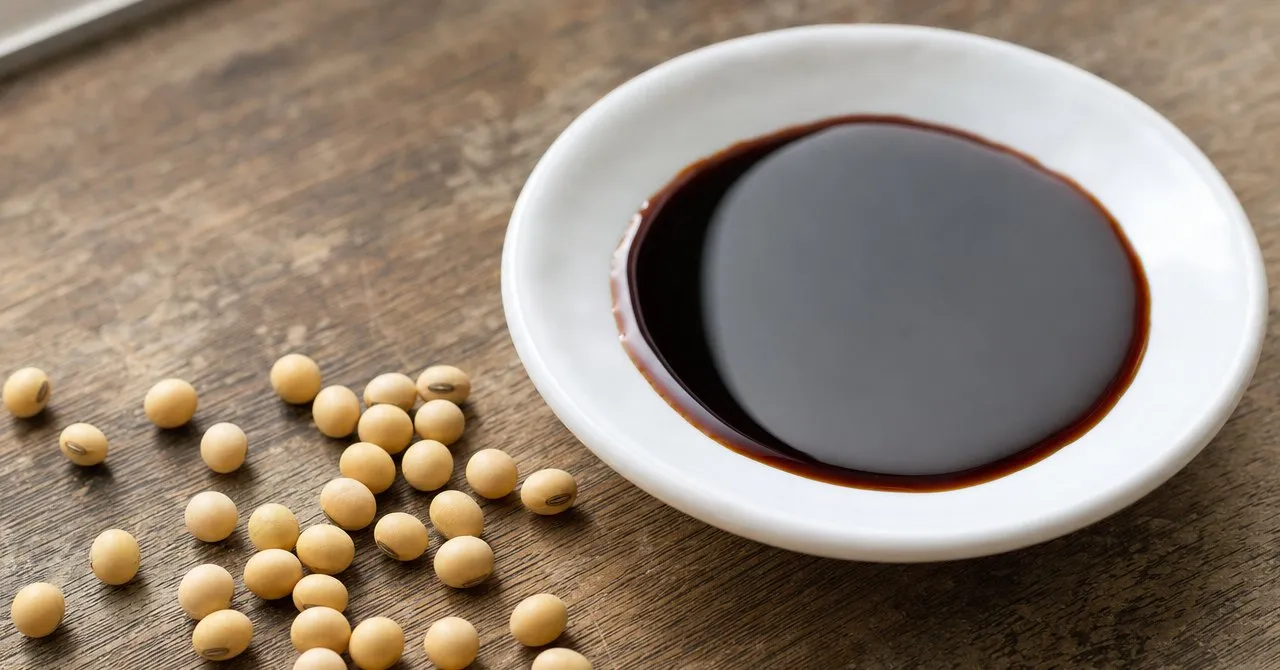
If you avoid gluten, you have probably been told to swap soy sauce for tamari. The advice has a real basis: tamari is the Japanese soy sauce made mostly, and sometimes entirely, from soybeans, while ordinary Japanese soy sauce uses roughly equal parts soybeans and wheat.
The catch is the word “sometimes.” Japan’s own product standard allows tamari to include a small amount of wheat. A Japanese food-culture researcher describes tamari makers who use some wheat and others who use none. And in the US, Kikkoman sells tamari both ways: one lists wheat, and its other tamaris are labeled gluten-free.
So the short answer is that tamari is often gluten-free, but the name alone doesn’t tell you. The label does.
The short answer
- By Japanese definition, tamari may contain wheat. The JAS standard for soy sauce defines tamari as made from soybeans, or soybeans with a small amount of wheat or barley (麦, mugi).
- In practice, both kinds exist. A Japanese researcher writing in Kikkoman’s FOOD CULTURE journal describes tamari as mainly soybeans with “just a little” wheat, and reports makers who use some wheat and makers who use none.
- US shelves carry both. Kikkoman USA’s Tamari Soy Sauce lists wheat in its ingredients. Its Gluten-Free Tamari does not. San-J says its tamari is made with no wheat and is certified gluten-free.
- Look for a gluten-free claim on the label. In the US, that claim has a legal definition set by the FDA. The word “tamari” does not.
What Japan’s standard actually says
Soy sauce in Japan is covered by a Japanese Agricultural Standard, JAS 1703, revised in 2021. It defines five types of soy sauce by what goes into the koji, the mold-cultured base of the brew, and by how they are brewed. (For all five types, see Japanese Soy Sauce Isn’t One Thing.)
Here is the definition of tamari, in full:
「しょうゆのうち,大豆若しくは大豆に少量の麦を加えたもの又はこれに米等の穀類を加えたものをしょうゆこうじの原料とするもの」 “Soy sauce whose koji is made from soybeans, or from soybeans with a small amount of mugi added, or from either of these with rice or other grains added.” — JAS 1703:2021, definition of tamari (3.11)
Mugi (麦) is a general word for wheat, barley and similar grains. The standard’s list of raw materials includes wheat, barley and naked barley (小麦,大麦及び裸麦). Wheat, barley and naked barley (a hull-less barley) are all gluten-containing grains under the FDA’s definition, so for anyone avoiding gluten the distinction between them doesn’t matter.
The definition allows “a small amount” (少量) of mugi, without putting a number on it. It doesn’t require any. Both a soybeans-only tamari and a tamari with a little wheat fit the definition.
Compare tamari with its neighbors in the same standard:
| Type | Koji ingredients, per JAS 1703 |
|---|---|
| Koikuchi (regular Japanese soy sauce) | Soybeans with roughly equal mugi (rice or other grains may be added) |
| Tamari | Soybeans, or soybeans with a small amount of mugi (rice or other grains may be added) |
| Shiro (white soy sauce) | Mugi with a small amount of soybeans (wheat gluten may be added) |
Tamari sits at the low-wheat end of Japanese soy sauce. “Low” is not the same as “none.”
One more point: JAS is a Japanese standard. A bottle sold in the US is labeled under US rules, not JAS. What US rules do define is “gluten-free,” covered below.
How tamari is made in Japan
Tamari comes from central Japan. The Soy Sauce Information Center (soysauce.or.jp), a Japanese soy sauce information site, describes it this way:
「たまりしょうゆは、主に中部地方で造られる色の濃いしょうゆです。」 “Tamari is a dark soy sauce made mainly in the Chubu region.” — Soy Sauce Information Center (soysauce.or.jp)
The center adds that tamari is thick, rich in umami and distinctively aromatic. Long called sashimi-tamari, it is used at the table for sushi and sashimi, and in cooking such as teriyaki because it turns an attractive red when heated (see Teriyaki Is Not a Sauce).
The most detailed account we found is by Yuka Utsunomiya, writing as an associate professor at Gakushuin Women’s College, in Kikkoman’s FOOD CULTURE journal (No. 28). She describes the area around Ise Bay and Mikawa Bay, meaning Aichi, Gifu and Mie prefectures, as tamari country, and notes that tamari makes up about 2% of the soy sauce produced in Japan.
Her summary of what tamari is starts with its ingredients:
「主原料は大豆で、小麦はわずか。」 “The main ingredient is soybeans, with just a little wheat.” — Yuka Utsunomiya, FOOD CULTURE No. 28
She explains that tamari grew out of making mame miso, miso made from only soybeans and salt. The soybeans are steamed and formed into koji balls (味噌玉麹, miso-dama koji), brewed in brine, and fermented and aged for about a year while the pooled liquid is ladled back over the mash. A separate FOOD CULTURE article (No. 29), by Hiroshi Tachi of Tokyo University of Agriculture, passes on the account that tamari was born in the Muromachi period from the liquid that pooled in miso (味噌の溜り, miso no tamari). (For more on soybean-only miso, see Types of Japanese Miso.)
What matters here is that Utsunomiya’s regional reports point in both directions. Writing about Gifu, she notes that present-day tamari there, as of her writing, uses some wheat as well as soybeans. Writing about Mie, she relays what she was told there: that wheat-free tamari is in high demand abroad, the United States included, as a gluten-free product:
「小麦を使用しないたまりしょうゆは、グルテンフリーとして海外(アメリカ等)で注目され需要が高く、最近は国内でも要望が出てきているという。」 “Tamari made without wheat, she was told, has drawn attention and strong demand overseas, in the US and elsewhere, as a gluten-free product, and has recently begun to be requested in Japan as well.” — Yuka Utsunomiya, FOOD CULTURE No. 28, on Mie Prefecture
A Gifu brewer tells the same story. Yamakawa Jozo, named as the maker on a Rakuten store listing for its tamari “Nagara,” lists soybeans, salt and alcohol. Its English text says tamari is ordinarily made only from soybeans, that adding a small amount of wheat has become common, and that the company itself once used wheat. The page is a Japanese retail listing, so its gluten-free description is the maker’s own statement, not a claim under US labeling rules.
One brand, tamari both ways
The clearest example on American shelves comes from Kikkoman USA, whose soy sauce lineup includes a Tamari Soy Sauce made with wheat and two gluten-free tamaris (a regular one and a 50% less sodium version). Here is what the two full-sodium product pages say:
| Tamari Soy Sauce | Gluten-Free Tamari Soy Sauce (Non-GMO) | |
|---|---|---|
| Ingredients | Water, Soybeans, Salt, Wheat, Alcohol, Glucose | Water, Soybeans, Salt, Sugar |
| Allergen line | “Contains: Soy, Wheat.” | Not shown on the product page (soybeans are an ingredient) |
| Gluten-free claim | No | “Certified Gluten-Free” |
| Sodium per 15 mL (1 tbsp) | 1,070 mg | 980 mg |
Kikkoman describes the first as “Full-bodied, traditional Japanese tamari” with “just a touch of wheat to add depth, umami and dimension to the taste.” The second, it says, is “brewed without wheat.” Both are called tamari. Only the second is labeled gluten-free. Kikkoman also sells a separate Gluten-Free Soy Sauce.
San-J, a brand that traces its roots to 1804, when the Sato family began making soy sauce and miso as the San-Jirushi company, takes the soybeans-only side and brews in Virginia. Its “Our Tamari” page says:
“We make ours using 100% soybeans, with no wheat.” — San-J, “Our Tamari”
San-J states its tamari is “certified gluten-free by the Gluten-Free Certification Organization.” It also says typical soy sauces “contain about 40-60% wheat”; that figure is the company’s own and the page gives no source for it.
Japanese sources describe tamari both ways: soybeans only, or soybeans with a little wheat. “Tamari” on a bottle describes a style of soy sauce, not a guarantee about wheat.
What “gluten-free” means on a US label
The FDA sets the rules for a “gluten-free” claim, in 21 CFR 101.91. In brief:
- The gluten-containing grains are wheat, rye and barley, and crossbreeds of them such as triticale.
- A food labeled gluten-free may not contain a gluten-containing grain as an ingredient, or an ingredient made from one that hasn’t been processed to remove gluten. Any gluten that is unavoidably present must be below 20 parts per million (20 mg of gluten per kg of food).
A tamari brewed with wheat as an ingredient fails the first test before anyone measures anything. That’s why Kikkoman’s wheat-containing Tamari carries no gluten-free claim.
The 2020 rule for fermented foods
Soy sauce is a fermented food, and fermentation creates a testing problem. In its 2020 final rule on fermented and hydrolyzed foods, the FDA said it knows of no scientifically valid method that can precisely detect and quantify gluten in such foods. It said sandwich ELISA methods, a common kind of gluten test, are not effective for them, noting that the method needs at least two binding sites (epitopes) to work.
So when no scientifically valid test is available, which the FDA said in 2020 was the case for these foods, the rule requires the manufacturer of a fermented or hydrolyzed food labeled gluten-free to keep records showing that:
- the food met the gluten-free requirements before fermentation or hydrolysis,
- the manufacturer evaluated its process for possible gluten cross-contact, and
- where cross-contact was possible, it took steps to prevent gluten getting into the food.
The records must be kept for at least two years after the food enters interstate commerce and provided to the FDA on request during an inspection. The rule took effect on October 13, 2020, with a compliance date of August 13, 2021.
In short, under US rules fermentation doesn’t make a wheat-containing soy sauce gluten-free.
Where “tamari has no wheat” comes from
The idea isn’t made up. Japanese sources describe tamari as soybean-centered, and wheat-free tamari exists and is sold abroad as gluten-free. The problem is stating it as a rule with no exceptions.
Food Network’s guide to tamari versus soy sauce, for example, says:
“Because it does not contain any wheat, tamari is gluten-free.” — Food Network, “Tamari vs. Soy Sauce: What’s the Difference?” (2023)
The same piece describes tamari as “made from soy and rice,” with “koji (fermented rice).” That doesn’t match the Japanese accounts above, where the koji is made from soybeans. JAS does allow rice or other grains to be added, but rice isn’t the base. To its credit, the article also tells readers to “double check labels since some manufacturers add wheat.”
A Daily Harvest article says tamari “is made using solely soybeans” and “is just soybeans and no grains,” then adds, “If you need to avoid gluten, the answer is clear: Tamari all day.” It also advises choosing “a bottle specifically labeled ‘gluten free.’”
That last piece of advice in both articles is the right one. Where they overreach is in the general statements, which Japan’s standard, a Japanese researcher and at least one major US product all contradict.
How to shop for tamari if you avoid gluten
This article is about labels, not medicine. If you avoid gluten for a medical reason, follow the guidance of your doctor or dietitian, or of a national celiac disease organization. What the sources above support is the following:
- Look for a “gluten-free” claim on the package. In the US, that claim must meet the FDA definition above, including the record-keeping rule for fermented foods where it applies.
- Read the ingredient list and the “Contains” line, not just the front label. Kikkoman’s wheat-containing Tamari says “Contains: Soy, Wheat.”
- Don’t go by the word “tamari” alone. Kikkoman sells tamari both with and without wheat.
- On a Japanese-language label, wheat is 小麦 (komugi) in the ingredient list (原材料名). Yamakawa Jozo’s wheat-free tamari, for comparison, lists 大豆 (soybeans), 食塩 (salt) and アルコール (alcohol).
- Check again when you restock. Formulas and labels can change, and a brand may sell more than one tamari.
Is tamari lower in salt?
Not reliably. Japan’s official food composition tables list tamari at 13.0 g of salt equivalent per 100 g and koikuchi at 14.5 g, but that is a national reference value, not a rule for every bottle: Kikkoman USA’s Tamari lists 1,070 mg of sodium per 15 mL (1 tbsp) against 960 mg for its regular Soy Sauce. For sodium, read the Nutrition Facts panel. (Japanese and US tablespoons are effectively the same; see Cooking Japanese Recipes in an American Kitchen.)
FAQ
Is tamari gluten-free? Often, but not always. Japan’s JAS standard allows tamari to contain a small amount of wheat, and some tamari sold in the US lists wheat as an ingredient. Look for a gluten-free claim on the label.
Does tamari have wheat? Some does and some doesn’t. Kikkoman USA’s Tamari Soy Sauce lists wheat and says “Contains: Soy, Wheat.” Its Gluten-Free Tamari lists water, soybeans, salt and sugar. San-J says its tamari is made from 100% soybeans with no wheat.
What’s the difference between tamari and soy sauce? Tamari is one of Japan’s five official types of soy sauce. Ordinary Japanese soy sauce (koikuchi) is brewed from roughly equal soybeans and wheat; tamari is mainly soybeans, with a small amount of wheat or none. Tamari is traditionally made in central Japan and grew out of soybean miso making.
Is there gluten-free soy sauce that isn’t tamari? Yes. Kikkoman USA, for example, sells a Gluten-Free Soy Sauce separately from its gluten-free tamaris. As with tamari, rely on the gluten-free claim on the label, not the product name.
Does fermentation remove the gluten from soy sauce? Under US rules, it doesn’t change the labeling answer. Under the FDA’s 2020 rule, a fermented food labeled gluten-free must be documented as meeting the gluten-free requirements before fermentation, because the FDA said it knew of no scientifically valid test that can precisely measure gluten in fermented foods. A soy sauce brewed with wheat doesn’t meet those requirements.
How this article was researched
The Japanese side of this article is built on Japanese-language sources: the JAS standard for soy sauce (JAS 1703:2021), the Soy Sauce Information Center, articles by Yuka Utsunomiya and Hiroshi Tachi in Kikkoman’s FOOD CULTURE journal, a Gifu brewer’s product page and Japan’s official food composition tables. The US side relies on the FDA’s regulation text (21 CFR 101.91), the 2020 final rule in the Federal Register, and the official product pages of Kikkoman USA and San-J, checked in October 2026. Labels and formulas change, so check your own bottle. Japanese quotations are kept short and translated by us. This site has not tasted, tested or lab-analyzed any of these products, and nothing here is medical advice.
Sources
Japanese sources:
- 日本農林規格 しょうゆ(JAS 1703:2021)— MAFF, JAS standard for soy sauce, including the definition of tamari (PDF)
- しょうゆ情報センター しょうゆの種類 — Soy Sauce Information Center, types and uses of soy sauce
- 宇都宮由佳「愛知・岐阜・三重のしょうゆ」— Yuka Utsunomiya, soy sauce of Aichi, Gifu and Mie, Kikkoman FOOD CULTURE No. 28 (PDF)
- 舘博「関東のしょうゆ」— Hiroshi Tachi, soy sauce of the Kanto region, Kikkoman FOOD CULTURE No. 29 (PDF)
- 山川醸造「十水仕込溜醤油 長良」— Yamakawa Jozo’s tamari “Nagara,” product listing (Rakuten)
- 文部科学省 食品成分データベース — たまりしょうゆ / こいくちしょうゆ (MEXT food composition database)
US regulations:
- 21 CFR 101.91 — Gluten-free labeling of food (eCFR)
- Food Labeling; Gluten-Free Labeling of Fermented or Hydrolyzed Foods — Federal Register, August 13, 2020
US product pages:
- Kikkoman USA — Tamari Soy Sauce
- Kikkoman USA — Gluten-Free Tamari Soy Sauce (Non-GMO)
- Kikkoman USA — Soy Sauce (Non-GMO)
- Kikkoman USA — All soy sauces
- San-J — Our Tamari
- San-J — Tamari Gluten Free Soy Sauce for Food Service
English-language examples:
- Food Network — Tamari vs. Soy Sauce: What’s the Difference?
- Daily Harvest — Tamari: What’s the Deal with this Soy Sauce Substitute?
More on Japanese soy sauce and miso: Japanese Soy Sauce Isn’t One Thing, Types of Japanese Miso and What English-language Japanese recipes get wrong.